







Click to Skip Ahead
Rats are thought to eat just about anything that they come across, which is true for the most part because they are true scavengers. However, not everything that a rat finds and then eats is good for them. So, as the owner of a pet rat, you may be wondering whether rats can eat walnuts. The short answer is yes, rats can eat walnuts. There are a few benefits that rats can reap by eating walnuts, but there are also a few considerations to make before giving your rat walnuts at all. Let’s discuss these things here.

The Benefits of Feeding Walnuts to Rats
Walnuts can be offered occasionally as a protein- and fat-rich treat for rats, helping to support energy needs in small amounts. These nuts also contain beneficial vitamins and minerals, including B6 and E vitamins, phosphorus, and folate, which contribute to overall health. Additionally, walnuts are packed with antioxidants, which can be particularly beneficial for aging rats by potentially reducing oxidative stress.
Because walnuts are high in fat and calories, they should be fed sparingly, perhaps a small piece once or twice weekly. Most rats happen to love the taste and texture of walnuts, which makes this food ideal for training time.

Considerations to Make When Feeding Walnuts to Rats
While walnuts are good for rats, feeding a rat too many of them can lead to problems. For one thing, walnuts are full of healthy fats, which can lead to good health in a rat. However, if a rat eats too many walnuts regularly, it could end up becoming obese and developing problems such as obesity-related heart strain or insulin resistance, which can resemble diabetes in rats.
Therefore, walnuts must make up only a small percentage of a rat’s diet. Walnuts should be offered occasionally, as snacks and treats. Alternatively, they can be reserved for training sessions. Walnuts are just one of the many yummy treats that you can feed your pet rat throughout their lifetime. Just remember that treats should make up less than 5% of the total diet altogether.

Other Healthy Foods That Rats Can Eat
Rats are omnivores, meaning that they eat both animal and plant foods to stay healthy throughout their lifetimes. This is the case for both wild and domesticated rats. To ensure that a rat gets all the necessary vitamins and minerals for good health, it is a good idea to utilize a commercial pet food that is formulated specifically for rats. This commercial food can make up about 75–80% of your rat’s diet overall, as it is designed to provide all essential nutrients that a rat needs to thrive.
Keep in mind that offering only human foods to rats can create nutrient deficiencies that can negatively affect their health in the future. That said, there is no reason to completely keep human foods away from your rat. Here are the healthiest options to consider:
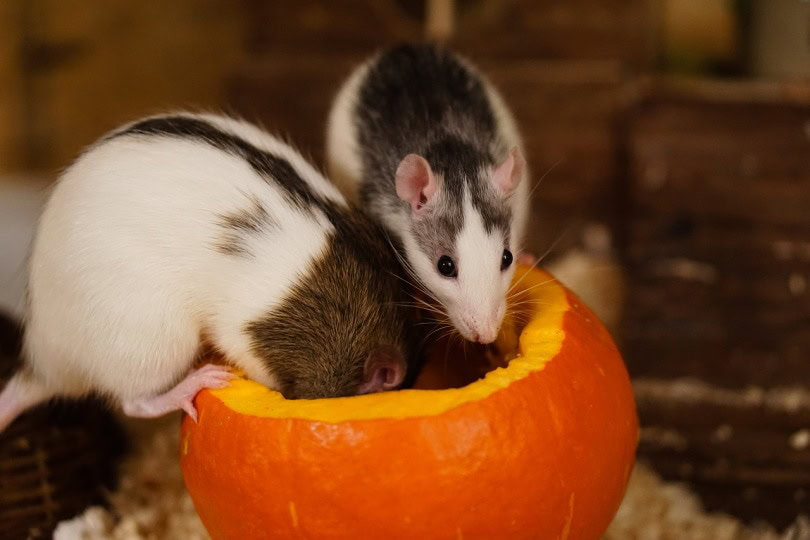
You can also give your rat premade items such as plain, sugar-free, low-fat yogurt, plain, unsweetened cereal pieces, and even the occasional piece of baked potato wedge.
If your rat does not seem to like a particular food that you offer, there is no need for alarm. Just stop feeding it to your pet and try something new! Your rat will not become nutrient-deficient just because they do not eat one type of food. Remember that the bulk of their nutrition comes from their rat pellets or block, which is a complete and balanced meal for your rat. Fresh veggies, fruits, seeds, and cereal treats are just supplemental. In addition to offering a variety of foods to your rat each day, it is essential to ensure that their bottle with fresh, clean water is always available and working properly. Get into the habit of ensuring it is always clean and well-maintained by changing and checking it every day.
In Conclusion
Now that you know how walnuts can benefit a rat as time goes on, you can start figuring out how you want to introduce these nuts into your pet’s diet. Snack and training times are excellent opportunities to offer a few pieces of walnuts as a treat and take this opportunity to show your rat just how much you love them.
You may also want to read: