







Click to Skip Ahead
As omnivores, rats can eat a variety of foods. There are many options when it comes to appropriate snack foods, so it can be hard to know which ones are good for your pet. When it comes to popcorn, we have good news: Rats can eat plain popcorn (no butter, salt, sugar, or seasonings).
In this article, we discuss this topic in-depth, including what types of popcorn rats can have, other foods that rats can eat, and the vitamins and minerals that these rodents need in order to stay healthy.

What Kind of Popcorn Can Rats Eat?
As long as the popcorn that you offer your rat is plain, unsalted, and unbuttered, it is fine for your rat to eat. That means movie theater popcorn, kettle corn, or any other flavored popcorn is a no-go for your rat. Salt is not good for rats and can actually make them sick if they eat too much of it. You should also watch out to make sure that your rat’s popcorn pieces are small enough to chew easily, as large or unpopped kernels can pose a choking hazard or damage their teeth.
Keep in mind that popcorn should not replace your rat’s primary diet and should be used as a snack only. While tasty for rats, popcorn does not offer very much in the way of nutrition. It’s best to mix up the types of snacks you give your rat for the greatest nutritional benefit. Keep reading to learn more about what rats can eat other than popcorn!

What Do Rats Eat?
Non-urban rats in the wild eat mainly seeds, fruits, and plants, though they are opportunistic omnivores and may also consume insects or small animals when available. However, as you may know, the diet of urban rats looks very different and is based on whatever they can find. Urban rats tend to search human garbage to find food and will eat all kinds of things, from junk food to meat. Perhaps that’s why urban rats can be so much heavier than other common rats; while common rats usually weigh between 1/3 of a pound to 1 pound, urban rats can weigh up to 2 pounds!
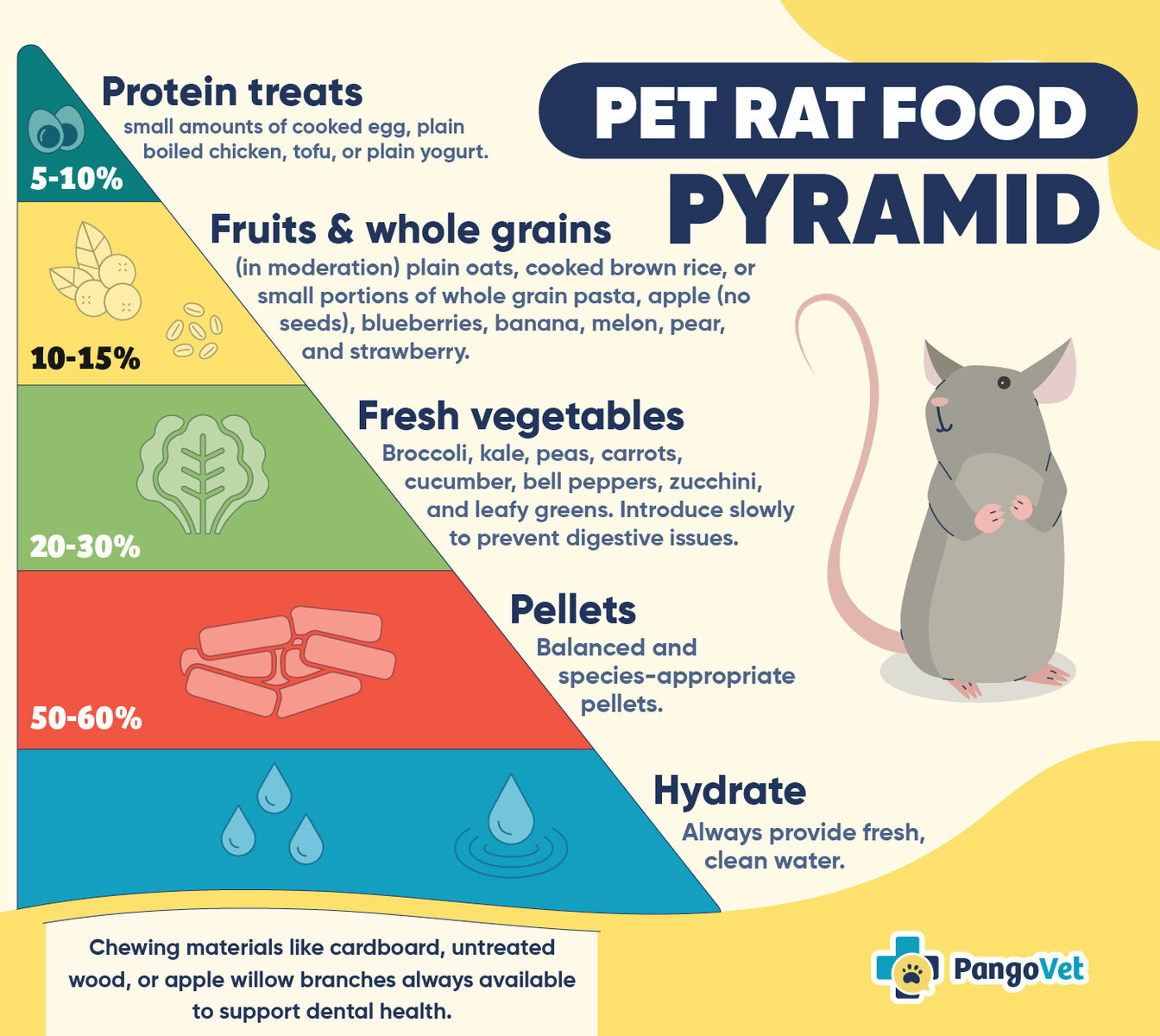
Pet rats should eat food that is specifically formulated for rodents to ensure that they are getting the nutrients they need to stay healthy. Formulated rat food usually comes in pellet or block form. Make sure the food you select is for rats, not hamsters or gerbils. Diets made for other small rodents are not usually suitable for rats, as each animal has different nutritional requirements. Your rat should be getting every nutrient, vitamin, and mineral they need by consuming at least 75-80% of their diet from this species-specific special rat block or pellet diet.
If you prefer, you can prepare homemade rat food using carefully researched recipes, but you must be prepared to provide supplements and ensure the diet is nutritionally complete to meet all of your rat’s needs. In addition to a nutritionally rich main diet, offer your rat a variety of nutritious snacks, such as vegetables, fruits, or grains. Since rat teeth grow continuously, they need something to gnaw on to help evenly wear their teeth down naturally. Offering rat-safe chews, such as untreated wood blocks, cardboard, or compressed hay cubes can help keep their teeth under control.
What Vitamins and Minerals Do Rats Need?
Like humans, rats need specific vitamins and minerals in order for their bodies to function properly. While their nutritional needs share some similarities with humans, there are important species-specific differences. Rats need vitamin A, vitamins B-complex, vitamin D, vitamin E, Phosphorus, Calcium, Iron, Zinc, Magnesium, Sodium, Potassium, and Manganese, amongst other essential nutrients, to ensure they stay healthy. We dive into a few of these below.
Calcium
Rats need plenty of calcium to support healthy bones and growth, as well as proper nerve and muscle function. Rats with calcium deficiency are prone to bone weakness, fractures, stunted growth, and, in severe cases, issues like hind limb weakness or bleeding disorders due to impaired clotting.
Calcium-to-phosphorus balance is critical in rat diets. An ideal Ca:P ratio is 1.2:1 to 2:1. Excess calcium can also pose risks, particularly for older males, by increasing the likelihood of bladder stones. While calcium-rich foods like plain yogurt, cooked beans, and dark leafy greens can be offered occasionally, cheese is high in fat and low in calcium, making it a poor dietary source and best reserved as a rare treat.

Manganese
Manganese is involved in bone development and plays a role in enzyme activity and metabolism of carbohydrates and fats. A manganese deficiency can result in skeletal problems, stunted growth, and birth defects. Healthy snacks that have manganese include cooked brown rice, chickpeas, whole grains, spinach, and pineapple.
Vitamin K
Vitamin K has a large role in blood clotting, and a vitamin K deficiency in rats can result in blood loss from minor injuries and even spontaneous internal bleeding. To help your rat get more vitamin K, feed it plenty of leafy greens, such as Swiss chard, kale, and mustard greens. Broccoli, brussels sprouts, and green peas are also sources of vitamin K. Gut bacteria also produce vitamin K, so maintaining good digestive health is important.
Vitamin B12
Vitamin B12 plays an important role in the production of red blood cells and the proper function of the nervous system in your rat. Commercial lab blocks or fortified rodent diets are the best sources of vitamin B12.
Vitamin D
Vitamin D is essential for calcium absorption and bone mineralization, helping to prevent metabolic bone disease. Rats synthesize vitamin D through limited sunlight exposure, but pet rats kept indoors rely entirely on their diet for this nutrient. A deficiency can cause weak bones, poor growth, and muscle tremors, while excessive supplementation can lead to soft tissue calcification. Balanced commercial lab blocks formulated for rats provide safe, adequate vitamin D levels.
Zinc
Zinc supports skin health, wound healing, immune function, and reproductive health in rats. Deficiency may cause hair loss, skin crusting (especially around the face and paws), and delayed healing. Good dietary sources include whole grains, peas, lentils, and pumpkin seeds offered in moderation as part of a balanced diet.
Summary
At the end of the day, rats can eat popcorn, but there are other, more nutritious treats that you can offer your pet. If you do feed popcorn to your rat, make sure it does not have any additives that can be harmful or cause unnecessary weight gain, such as salt and butter.
Here’s another thought: