







Birds have long been popular companions to humans (notably, many species of parrots), and an estimated 5 million households keep them as pets in the United States alone.1 Before choosing a pet bird, though, it is vital to do your research, as many species require a massive amount of attention and special care, and some are even likely to outlive their owners!
Small species, such as budgies, doves, and canaries, are great for beginners. They are easy to care for and don’t require a significant amount of attention and interaction. They are also straightforward to feed and house and typically don’t live as long as macaws and other large parrots, which can live for over 60 years.
Just remember that birds are highly intelligent creatures that need their physical and mental needs met. So, if you have the time and dedication to devote to these animals and are ready to bring home one as a pet, here are 12 of the best types of birds for pets.

The 12 Popular Types of Pet Birds
1. African Grey Parrot

The African grey is one of the most intelligent parrots on the planet. Its astounding ability to learn and imitate speech has caused some people to call it, “The Einstein of the Bird World.” There are two distinct subspecies of African greys: the Congo, with a large body and black beak, and the Timneh, with a small body, dark gray body feathers, and maroon tail feathers.
Although African greys are a high-maintenance species that can live for over 50 years, they bond strongly with their owners and are affectionate companions, making them the best pet birds you can get.
2. Amazon Parrot
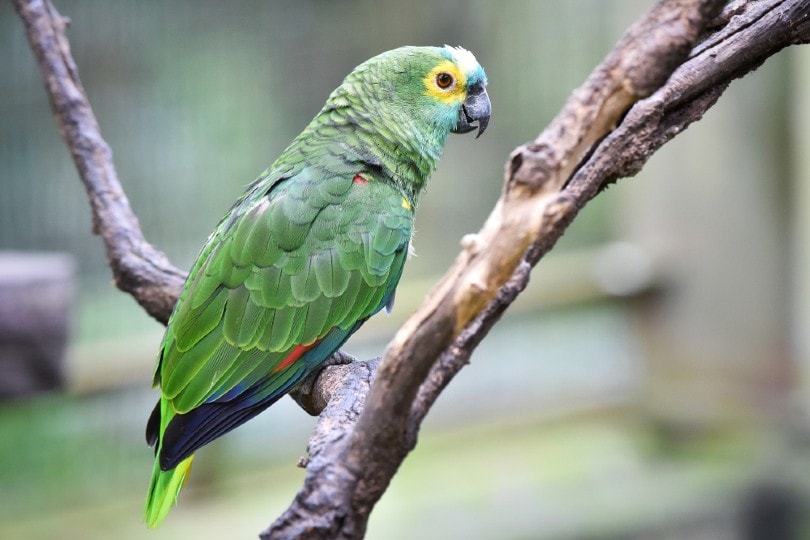
Amazon parrots are among the most popular medium-sized birds due to their playful and outgoing nature. They are bold and comical birds that enjoy being the center of attention and are known for their talking and singing. While they adjust well to being pets, they require a great deal of attention and mental stimulation, without which they are prone to behavioral problems. Amazon parrots typically live for 40 to 50 years, though some live even longer.
3. Budgerigar

Also known as parakeets or budgies, budgerigars are intelligent little birds that are lower maintenance than bigger parrots and require less space, making them a popular choice for first-time owners. They can talk just as well or better than larger parrots, and some have developed fairly complex vocabularies. They come in several beautiful colors, live 12 to 14 years, and are among the best pet birds you can find.
4. Canary

Canaries have been bred for hundreds of years by bird enthusiasts and have been developed into over 200 subspecies, each with a unique character and appearance. They are well known for detecting noxious gases in coal mines in the late 1800s and for inspiring the popular cartoon character Tweety Bird. They are great for beginners because they are easy to care for, have a friendly disposition, and typically live for 5 to 15 years.
5. Cockatiel
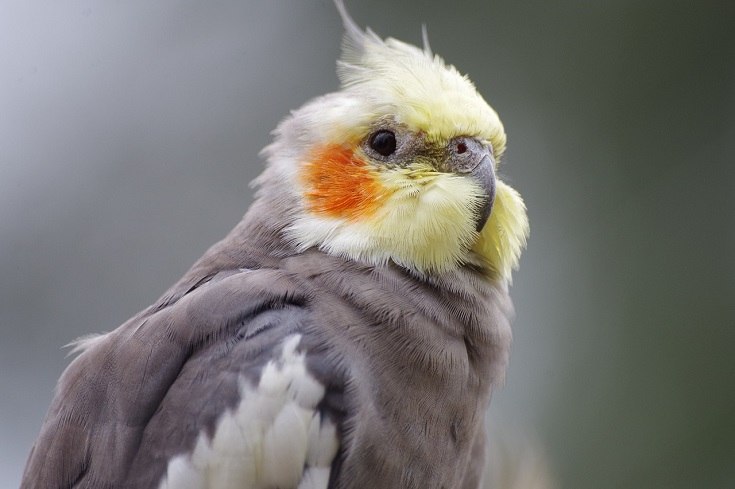
The medium-sized cockatiel is a member of the cockatoo family and is often described as comical, outgoing, and cuddly. It enjoys snuggling its owner’s shoulder, for example. It’s known for whistling and singing more than talking and has an impressive head crest. It can come in various beautiful colors and typically lives for 10 to 15 years.
If you’re new to the wonderful world of cockatiels, you’ll need a great resource to help your birds thrive. We highly recommend taking a closer look at The Ultimate Guide to Cockatiels, available on Amazon.

This excellent book covers everything from the history, color mutations, and anatomy of cockatiels to expert housing, feeding, breeding, and health care tips.
6. Cockatoo
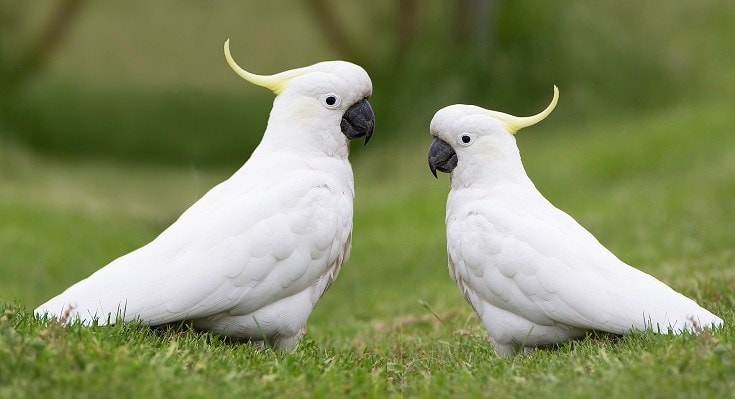
Cockatoos are great companion birds known for their affectionate, comical, and mischievous characters. They demand a great deal of attention and are commonly referred to as “Velcro birds” since they love being close to their owners. The cockatoo subspecies consists of around 21 birds, most recognizable for their prominent crests and curved bills. They can be noisy at times.
While these parrots make great pets, they can be a bit challenging to care for, and some varieties can live for over 60 years. They are also incredibly noisy and may not be suitable if you live in an apartment.
7. Conure

Conures are comical, fun-loving birds and popular companions. They are small to medium-sized parrots with stunning yellow, green, red, and orange plumage. These social birds love to be close to their owners and are known for their gentleness and patience with children.
They are also known for being attached to and friendly with the entire family and don’t get attached to one owner, as many other parrots do. There are almost 100 different subspecies of conures, making this one of the most diverse species. They have a lifespan of 15 to 30 years.
8. Dove
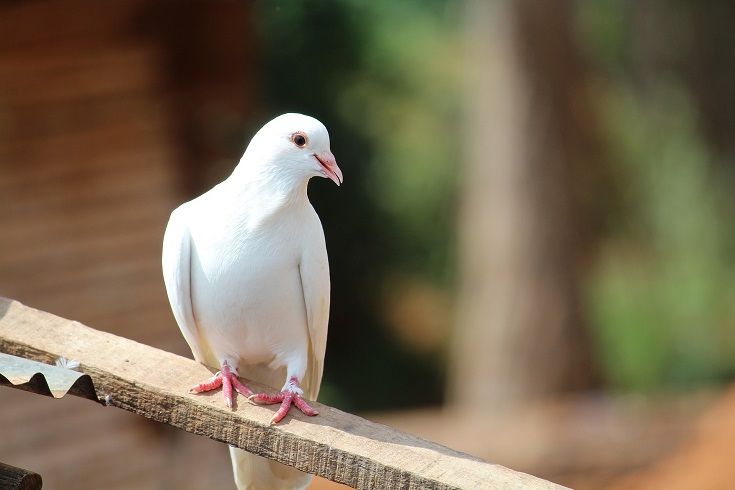
Perhaps a surprising addition to this list, a dove makes a great companion when raised and cared for properly. These birds are good-natured, friendly, easy to look after, and quieter than parrots. They will happily perch on your shoulder as parrots do. When raised properly, they are highly affectionate birds that enjoy human interaction, including petting and cuddling. The most popular pet doves are ringnecks, which have an average lifespan of 12 to 15 years.
9. Finch

The tiny finch has become popular due to its quiet nature and hands-off maintenance. There are hundreds of different subspecies of finches, but the most popular ones include the zebra finch, owl finch, and society finch. While these birds are easier to care for than parrots because they don’t require human interaction, they need a large aviary and are happiest when kept in pairs or groups. They are unlikely to naturally perch on your shoulder, but some can be trained to do so with patience. Finches typically live for about 10 years.
10. Lovebird

As one of the smaller species of parrots commonly kept as pets, the lovebird gets its name from the loving bond that it forms with its mate. There are nine subspecies of lovebirds, each with unique characteristics and coloring, but they are all active and loving. Lovebirds are best kept in pairs, and there is a common myth that they will die of depression if kept alone. While that has been mainly proved untrue, they should still be given ample opportunity to live up to their name!
11. Macaw
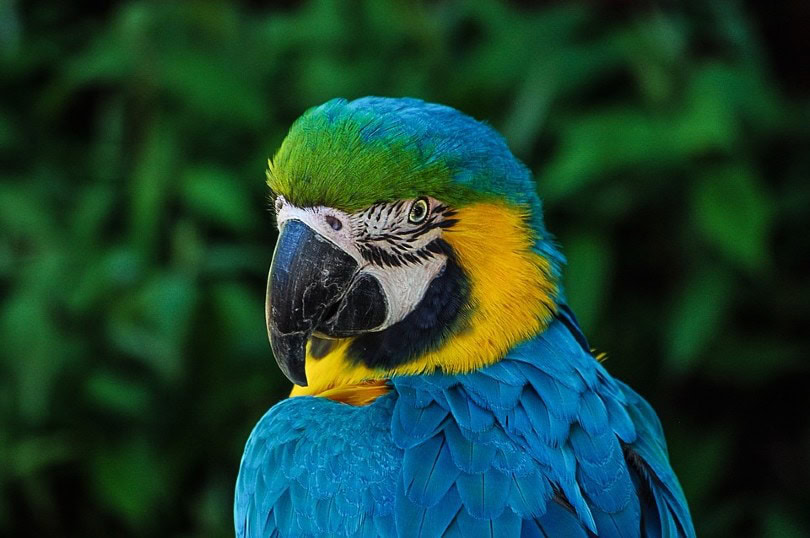
The macaw is one of the most famous parrots and for good reason. It’s a gorgeous, brightly colored bird with a large beak and long tail. While there are a few small subspecies, macaws are typically large and highly vocal birds that require plenty of attention and living space and are a massive responsibility. However, they are playful and active birds that make popular pets. They can easily live for 50 years or more in captivity, so they will likely be a lifelong commitment.
12. Parrotlet

Parrotlets are the smallest species in the parrot family. Like their larger cousins, they form strong bonds with their owners and are popular pets. Although small, parrotlets can live for 15 to 20 years or more if properly cared for. They are known for their feisty and sometimes mischievous temperament and require a lot of attention from their owners. They are also highly active birds that love to explore their environment, so they should be let out of their enclosures as much as possible.

Conclusion
If you’re looking to introduce a new pet into your family, why not give one of these birds a try? From tiny canaries and finches to large African greys and macaws, there’s something to suit any lifestyle. Just make sure to thoroughly research any species you want to bring into your home, to ensure that you’re up for the commitment and can provide the care that it needs. Remember, some of these birds can live for decades and are long-term commitments!
See Also:
Featured Image Credit: Vyaseleva Elena, Shutterstock