






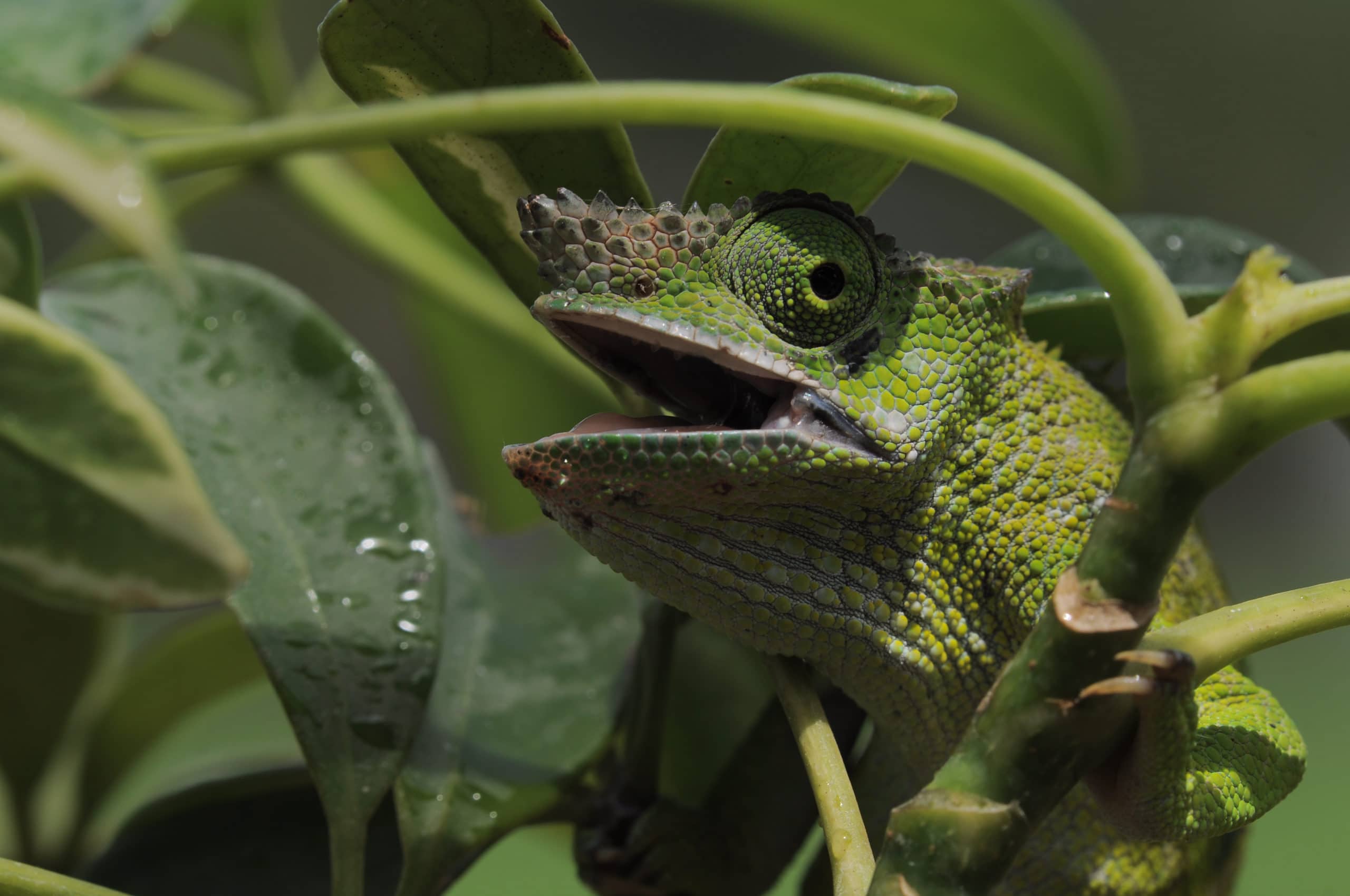
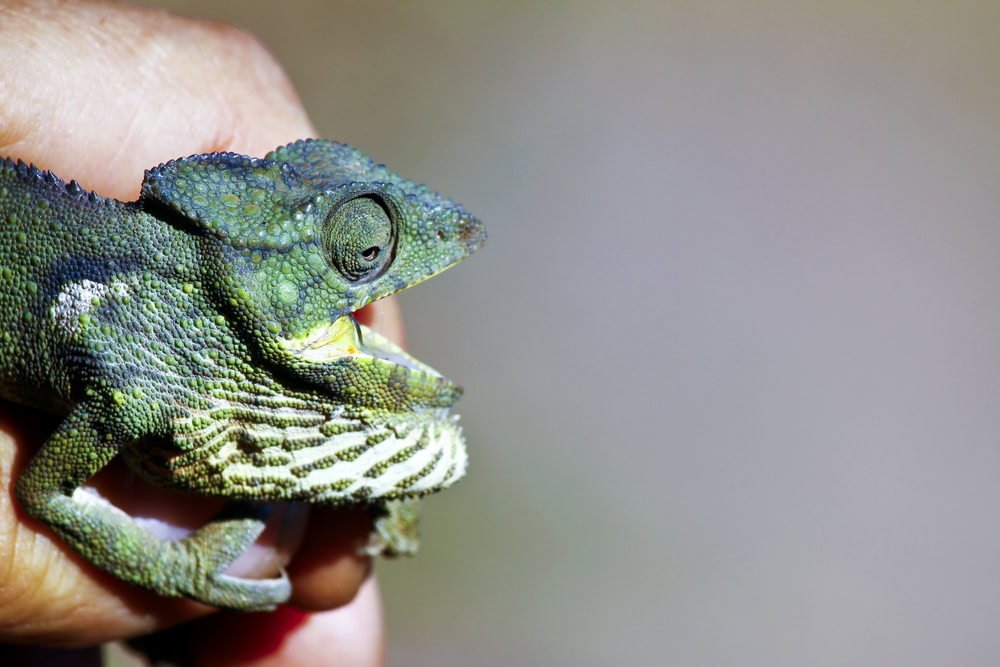
Chameleons have become increasingly popular pets for those who love more exotic creatures. If you’ve ever seen your reptile with its mouth open, you may wonder what’s going on. Chameleons may occasionally look like they’re yawning, but this open-mouth behavior, called gaping, is most commonly associated with thermoregulation, communication, or potential health concerns rather than sleepiness.
There are several reasons why chameleons keep their mouths open. Keep reading to learn more about why chameleons may display this behavior and how to address it appropriately.

The 5 Reasons Your Chameleon is Gaping
When a chameleon is consistently keeping its mouth open for extended periods, it’s displaying a behavior called “gaping.”
Gaping doesn’t necessarily indicate a problem. It can be a normal physiological or behavioral response depending on the context, but persistent or inappropriate gaping may indicate an underlying issue, which can vary depending on species, environment, and health status. Here are five of the more common causes of gaping in chameleons.
1. Temperature Regulation
A chameleon may gape when it’s trying to regulate its body temperature. As ectothermic animals, chameleons rely on external heat sources to warm up, and if they become too warm, they may open their mouths to help release excess heat, a little like a dog panting.
Along with gaping, a chameleon may display a lighter coloration to reflect heat and may move away from the basking area toward cooler, shaded parts of the enclosure. This behavior is typically brief and should resolve once the chameleon has adjusted its position within the temperature gradient.
It’s important to ensure that your chameleon’s enclosure provides a proper thermal gradient, with a clearly defined basking area and multiple cooler zones. This allows your chameleon to regulate its body temperature naturally and safely.
If gaping is persistent, occurs away from the heat source, or is accompanied by signs such as lethargy or eye closure, it may indicate overheating or another underlying issue rather than normal thermoregulation.
2. Threat Response
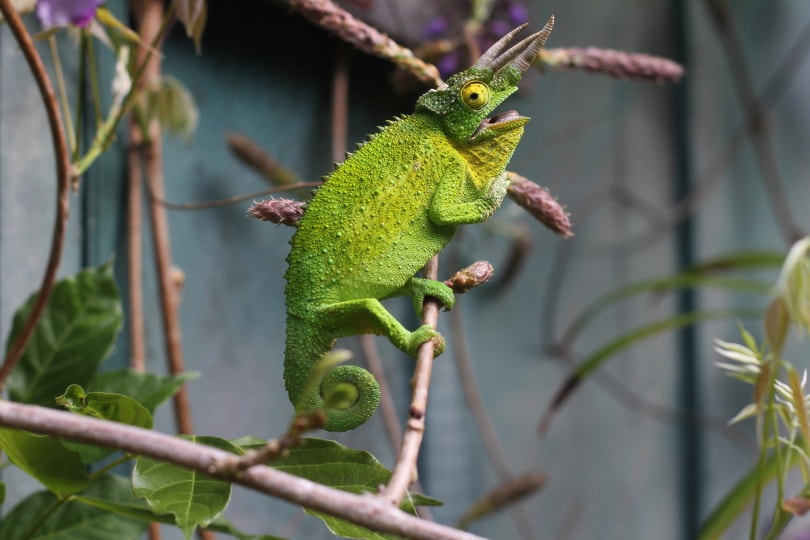
When a chameleon feels threatened and believes it has to act defensively, it will open its mouth. Opening the mouth makes the chameleon appear bigger so that its opponents feel more intimidated by its size.
Several factors can make a chameleon feel threatened:
- A new chameleon arrives in your home
- New pets come into your home
- Loud or strange sounds
- It doesn’t like being touched or handled
If a chameleon feels the need to be defensive, it will display other behaviors. It will flatten its body, change into more contrasting or darker colors, and inflate its gular or throat area. It may also lean sideways toward the perceived threat and may attempt to hiss or strike. It will also grip branches firmly and orient its body toward the threat.
Keep in mind that chameleons will often prefer to be observational pets, so they like being left alone in quiet spaces. Most species are not naturally tolerant of frequent handling, and excessive interaction can cause chronic stress.
Therefore, if you notice that they’re gaping whenever you come near their enclosure, it’s likely that they’re trying to let you know that they don’t want you to touch them. Don’t take this personally. It doesn’t mean that your chameleon doesn’t like you. It’s just displaying a common behavior, and you can still provide excellent care for and bond with your chameleon through calm, non-invasive interactions rather than frequent handling.
If you think your chameleon feels threatened by noise or other pets, the best thing to do is move the chameleon’s enclosure to a quieter location and see if the gaping stops.
3. Breathing Difficulties
Respiratory disease in chameleons is often associated with inappropriate temperature, humidity, or ventilation, and may involve bacterial, fungal, or mixed infections.
If a chameleon has trouble breathing, it may hold its head elevated or extend the neck in an attempt to improve airflow. Then, it will gape. A chameleon that starts to close its eyes after gaping is likely in serious condition, and it needs to see a vet right away.
You may also notice additional signs such as lethargy, decreased appetite, excess mucus, or abnormal breathing sounds. These signs indicate that the condition may be progressing and should not be ignored.
4. Oral Disease
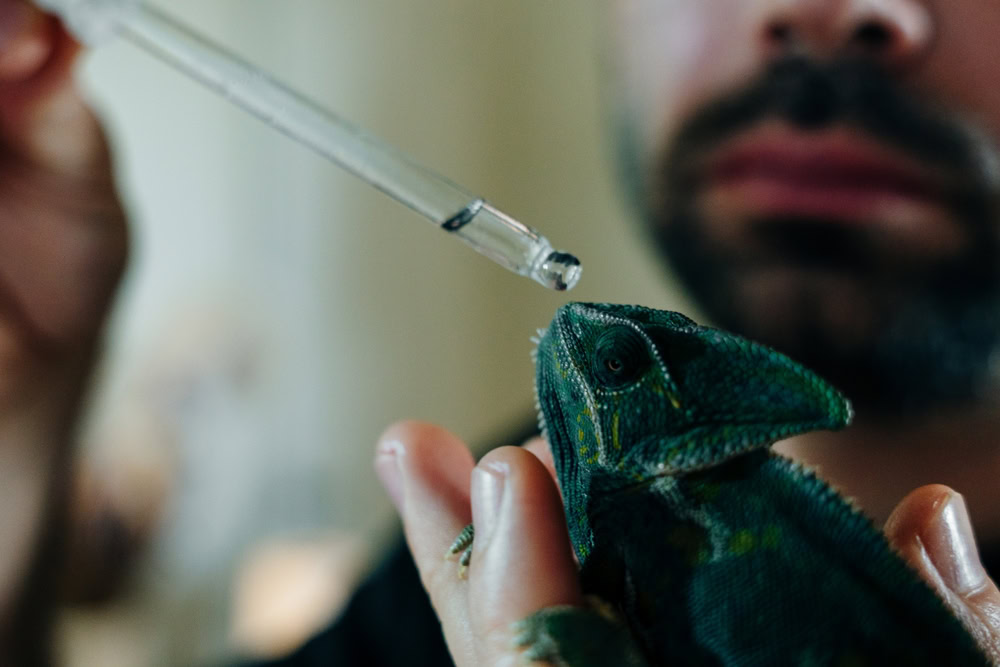
Another possible reason a chameleon may gape is due to discomfort or pain in the mouth. One of the most common conditions affecting the oral cavity is infectious stomatitis (mouth infection), which can develop due to injury, poor husbandry, or underlying illness.
If a chameleon has oral disease, it may gape as a response to irritation or inflammation. You might also notice swelling of the gums, redness, or yellow-white caseous (cheese-like) material inside the mouth. In more advanced cases, the chameleon may stop eating or appear lethargic.
Oral disease is not a normal condition and requires veterinary attention. Left untreated, it can progress and affect the jaw and overall health of the chameleon.
If you suspect any abnormalities in your chameleon’s mouth or notice persistent gaping along with other signs, it’s best to consult a qualified reptile veterinarian as soon as possible.
5. Oral Trauma or Foreign Object
In some cases, a chameleon may gape due to irritation inside the mouth. This can happen if a small foreign object, such as plant material or a prey item, becomes lodged or causes minor injury to the oral tissues.
If this occurs, the chameleon may open its mouth repeatedly or show abnormal jaw movements as it tries to relieve the discomfort. You might also notice reduced appetite or hesitation when eating.
While mild irritation may resolve on its own, persistent signs should not be ignored. Ongoing gaping or difficulty eating can indicate a more serious issue that requires evaluation.
If you suspect that your chameleon has something stuck in its mouth or is experiencing oral discomfort, it’s best to consult a qualified reptile veterinarian to safely assess and address the problem.
Final Thoughts
If your chameleon often looks like it’s yawning, it may be a normal behavioral response (such as thermoregulation or defense) or a potential health concern depending on the context. Take note of any other changes in behavior and the surrounding environment so you can better understand the reason behind their gaping mouth.
Lastly, don’t hesitate to consult with your veterinarian. Chameleons are subtle in their clinical signs and often mask illness until advanced stages, so it’s better to receive professional input to identify the cause of your chameleon’s gaping.
Related Reads:
Featured Image Credit: DSlight_photography, Shutterstock