






Click to Skip Ahead
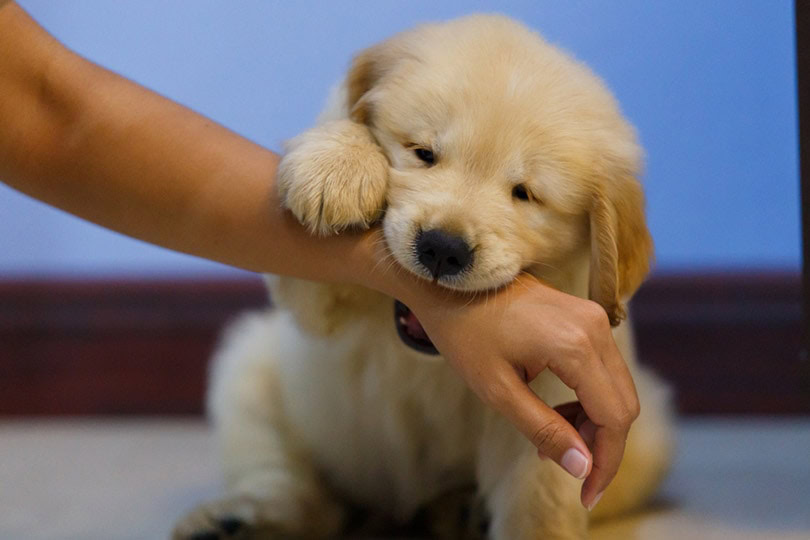
Bringing home a new puppy is exciting! Puppies are adorable, and you can’t help but ooh and aah over them. However, everything is new to puppies, and sometimes, puppies can be a bit aggressive during play as they navigate the world around them. While it may look cute, it’s not a behavior you should condone or allow if you want a well-behaved dog down the road.
So, why is your puppy so aggressive? Puppy aggression is not specified to certain breeds. A few reasons are to blame, and it’s wise to learn the four common reasons so you can differentiate between puppy play and aggression and learn how to remedy the situation. Let’s dig in.

The 5 Reasons Why Puppies Are Aggressive
1. They’re Playing and Learning
The critical period for puppy socialization is between 5 and 16 weeks of age. This is when they start to explore the world beyond eating and sleeping, and start learning how to interact with other dogs, as well as work out how to behave around humans and other animals. The skills they learn during this time can make-or-break your pup, so it is essential that we allow them to safely explore, experiment, and learn during this time.
Fighting and humping are often observed in young pups as a form of ‘rehearsal’ behavior. They’re not necessarily performing those actions as they would in the real world, they are going through the motions and figuring out how everything works. Although it is very important to ensure everyone is safe, it is just as important to allow pups to play-fight amongst themselves, as well as allow them to meet other dogs and learn about canine etiquette. Adults dogs recognize when a puppy is young and learning and will ‘pull their punches’ when it comes to telling them off for rude behavior; but they won’t be so patient as your puppy grows, so closely monitored play-fighting and discipline lessons are essential.
This is also when puppies need to very quickly learn that fighting, biting, and wrestling with humans is a no-go. If we tolerate it when they are small and harmless, they won’t understand why it’s a problem when they get bigger. This is particularly important if you have children in the house – teeth and claws must never be allowed to grab humans, and there must be no uncertainty about this rule. A short, sharp, deep “NO!” is the best way to immediately stop this behavior.
2. Poor Socialization
Dogs that have not been appropriately socialized during that important window of 5-16 weeks will have missed out on some essential life lessons, and may need some more intensive training to help them understand how to appropriately interact with dogs, humans, and other animals. Dogs that have been poorly socialized are by no means a lost cause, but they are going to struggle more with learning proper canine etiquette and may be more resistant or frustrated when being told ‘no’.
A dog is never too old to learn new tricks, but you may need to enlist the help of a dog trainer, behaviorist, or talk to your vet for guidance.
3. Pain

An animal in pain will be grumpy, and your puppy may act aggressively if they don’t feel well. If you feel your puppy is ill or injured, take them to the vet immediately so the problem can be addressed. An injury or illness may not be visible, and it’s vital to ensure your puppy is healthy.
One way to know your puppy is ill or injured is if they whimper when you touch or hold them. In that case, talking to a vet is most definitely warranted.
4. Overstimulation
Remember that everything is new to your puppy, and if they get overstimulated, they could become aggressive as a way to let out excessive energy because that’s all they know in their young life. Meeting new people and furry friends can cause overstimulation, as well as a new environment.
- Biting
- Large pupils
- Fast heart rate
- Hiding behind people or objects
- Running in circles
- Increased vocalization
- Not blinking
- Tail chasing
- Yawning
- Lip licking
- Excessive grooming
- Gnawing at the body
5. Stress

Puppies undergo many changes with new surroundings, which could be enough to cause stress, which can turn into aggression. Keeping your new puppy on a daily routine can help alleviate stress, and it’s also good for your puppy to learn about their everyday environment. It may be hard to identify stress in your puppy because everything is new, but here are a few signs that could indicate stress:
- Yawning
- Drooling
- Licking
- Change in body posture
- Dilated pupils
- Barking
- Whining
- Shaking
- Shedding
- Panting
- Hiding
- Changes in potty routine
If you feel your puppy is stressed, try removing them from the stressor. For example, if you’re around other dogs or loud noises, take your puppy to a quieter location.
Warning Signs of Puppy Aggression
| Non-stop biting: |
Play behavior in puppies generally involves mouthing and nipping each other on the scruff or back of the neck. It could also be a sign of teething. However, biting and nipping are considered aggressive if your puppy persists in rough play with another dog after that dog signals to stop. The biting may also be harsh and accompanied by growling.
|
| Possessive of food and toys: |
Resource guarding or possession aggression involves biting, lunging, and snarling over food, food bowls, and toys. Your puppy may show aggression when you or another pet in the home strolls past their prize possessions.
|
| Lunging: |
Many dog owners experience their dogs lunging while on a leash when they see people or other dogs, which is generally normal behavior. However, lunging could indicate fear aggression, which is when your puppy is using an ‘offense’ strategy to deal with something they see as scary or threatening, choosing ‘fight’ instead of ‘flight’.
|
| Body language: |
Learning your puppy’s body language will go a long way in determining play or aggressive behavior. Normal behavior involves tail wagging, bowing (lowered head and raised rump), running, and barking. Aggressive behavior involves pinned ears, growling, stiff, rigid posture, and staring intensively.
|
How to Remedy the Behavior
When puppies act aggressive, it’s usually because they’re scared, haven’t been around enough other dogs or people, or just don’t know how to play nicely yet. The best way to fix it is to help them get comfortable with new things, teach them not to bite hard, and show them what they can chew on instead of your hand.
Studies show that harsh punishment makes puppy aggression worse. Instead of using punishment methods, these studies prove that using a reward-based system is far more effective, resulting in a more friendly and well-adjusted dog. In other words, using positive reinforcement training is the best method. This means rewarding your puppy with a treat when they do something right. Never yell at or hit your puppy, as this will only make your puppy afraid of you and fearful of the world. It will also fail to remedy the situation. With patience and time, your puppy will grow into a well-behaved dog using this form of training.
If your puppy is showing aggressive or inappropriate behaviors, the short, sharp, “NO” can be used to interrupt the behavior, allowing you to move yourself (or the child, other animal) away until the pup has calmed down. The aim should be to stop and redirect, not to punish.

Conclusion
Puppy aggression and fighting can be an important part of their socialization and learning, but it can become problematic and dangerous if they are not being shown what is and what isn’t appropriate. Allowing your dog to stay with their littermates until they are around 12 weeks old is one way to ensure they get a lot of this out of their system before they come home with you, but it is also important to allow them to interact with dogs of different ages and sizes before they are are 16 weeks old so they can learn what will and won’t be tolerated when they get older. It’s vital to teach your puppy right and wrong, much like a child. Ignoring puppy aggression can become a dangerous situation in the future, making it essential to know how to prevent and redirect the precursors of aggression. Remember that everything is new to your puppy as they learn and grow, and it’s up to you as a dog parent to raise a well-behaved pooch.
Featured Image Credit: Damix, Shutterstock