







Click to Skip Ahead
Whether you are planning to get a chinchilla as a pet or have one already, you want to ensure you have the knowledge to care for them properly. When feeding any pet, the proper diet is essential to their health and well-being. Exotic pets, such as chinchillas, can be much more complex to care for compared to a standard cat or dog.
Chinchillas have an extremely sensitive digestive system; they can become severely ill if they are given food that is unsuitable for them. Chinchillas should never eat watermelon, as it is not compatible with their digestive system and can pose a severe health risk.
Watermelon is high in sugar and water content. Consuming foods that contain a lot of water content and/or sugar can easily upset their digestive system and cause bloat and diarrhea, which can be very harmful for these animals. Watermelon is one of many foods that should never be offered to a pet chinchilla.

Can Chinchillas Eat Fruit?
Chinchillas are predominantly herbivores, and in the wild, they primarily feed on grass, bark, twigs, and even insects and bird eggs on rare occasions. Even in the wild, food with high sugar content, such as fruits, can cause digestive distress.
It’s best to avoid feeding fruits as much as possible due to their high sugar and water content.
It’s not just watermelon that can cause diarrhea, bloating, and digestive distress for these little fluffballs, so it’s best to speak with your veterinarian regarding any fruit before offering it to your chinchilla. The health risks involved are very severe and potentially fatal.
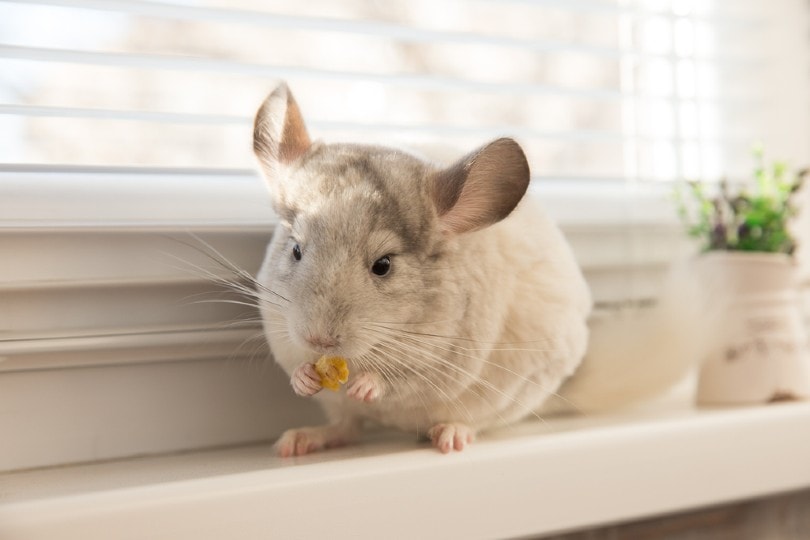
Proper Chinchilla Diet
Native to the arid, rocky slopes of the Andes Mountains at elevations ranging from 9,000–15,000 feet, Chinchillas used to be found all over the coastal and mountain regions of Argentina, Bolivia, Chile, and Peru, but are now only found in Chile due to population destruction because of the fur trade.
They live in burrows or within rock crevices, and their food is sparse. In the wild, they mainly feed on grasses, leaves, twigs, roots, and stems. They will occasionally consume flowers, berries, insects, and bird eggs for survival.
As pets, chinchillas need fiber-rich diets composed primarily of grasses and hay for proper digestive function. It is recommended that grass and hay make up 80 to 90 percent of their diet. While 10 percent of their diet should be species-specific high-quality pellets, and certain types of dried herbs as rare snacks.
Hay needs to be always available to them to aid digestion and to help control the shape and length of their continuously growing teeth. There are commercial pellet diets available for chinchillas, any pellets fed regularly should be hay-based, plain, and not contain any dried fruits, nuts, or seeds, or fillers such as corn or soy.
Chinchillas can be offered approximately a teaspoon or two of pellets daily. Though they can theoretically consume some fruits, it is recommended that they are severely limited and only given in the smallest amounts weekly, if any.
The 5 Types of Grass and Hay

1. Alfalfa Hay
Alfalfa hay is sweet and rich in nutrients. It’s a great option to offer young Chinchillas that are still in the process of growing, pregnant or nursing females, or for a previously malnourished chinchilla. This should not be a staple for full-grown adults since it contains too much calcium and protein.
2. Bluegrass Hay
Bluegrass hay is leafier hay that can be part of the chinchilla’s regular diet.
3. Oat Hay
Oat hay comes with oat heads included and is a good choice for Chinchillas. It should be made available at all times. It is pale yellow in coloration and since it is filled with stem, it has a much harder texture ensuring adequate dental wear.
4. Orchard Grass
Orchardgrass is a persistent, cool-season bunchgrass that is leafy and high in fiber. It is bright green and sometimes comes as a mix of Timothy hay, Garrison hay, and Alfalfa hay.
5. Timothy Hay
Timothy hay is derived from meadow grass that is both nutritious and flavorful. Timothy is lower in protein and calcium than some other options. You may come across Botanical hay, which is generally Timothy hay with some other herbs mixed in.
Treats & Supplements
Since a chinchilla’s gastrointestinal system is not designed to handle foods that are high in fat, sugar, or water. Commercial chinchilla treats and yogurt drops that are high in sugar are not recommended.
You do not need any salt block or mineral supplementation for a pet chinchilla.
Chinchillas may regularly eat their feces, like guinea pigs and rabbits. This is called cecotrophy and it allows them to absorb the maximum amount of nutrients from the food they have previously ingested.
Chinchillas can be prone to obesity if they are overfed, this can be very damaging to their livers and lead to several health problems.
You should always ensure fresh, clean water is available for your chinchilla. They do have water bottles that are specifically designed for chinchillas. It needs to be placed in a position that is easy to reach within the cage. Make sure to clean the bottle and provide fresh water daily.
Sudden changes in a chinchilla’s diet can cause severe illness. Failure to provide chinchillas with the proper dietary and nutritional needs can not only cause severe dental disease but can also be potentially detrimental to their digestive health. Always discuss dietary needs with an exotic animal veterinarian who has experience with chinchillas.
Foods to Avoid
Many foods are harmful or even toxic to chinchillas. Please keep in mind that this is not a complete list of all foods that can cause health problems for chinchillas. If you have to question whether or not the food is safe for feeding, you must avoid offering it until discussing it further with a veterinarian.
- Asparagus
- Avocado
- Banana
- Bread
- Broccoli
- Cabbage
- Cereals
- Citrus fruits (all varieties)
- Corn
- Lettuce
- Melon
- Rhubarb (and the leaves)
- Peaches
- Peanuts
- Pears
- Spinach
- Sunflower seeds
- Watermelon
Conclusion
It’s no secret that a chinchilla has a more complex diet than a lot of other household pets. Due to their sensitivity, they should never be fed foods that are high in sugar and water, such as watermelon.
Checking with your exotic animal veterinarian before offering new foods is a must. Feeding a chinchilla an improper diet can result in severe digestive distress and can be fatal. Ensuring they are fed the proper diet is essential to their overall well-being and will help them live their longest, healthiest lives.
See Also:
- Can Chinchillas Eat Bread? What You Need to Know!
- Why Do Rabbits Thump Their Feet? 5 Reasons for This Behavior
Featured Image Credit: P-fotography, Shutterstock