






Click to Skip Ahead
Chinchillas are adorable, and if you’ve ever bought one impulsively after seeing them in a pet store, we can’t blame you. Of course, now you have to feed it, and what do chinchillas eat, anyway? They’re basically big hamsters, so can they eat hamster food?
As it turns out, the answer is no. Feeding a chinchilla hamster food isn’t toxic, so it won’t kill them immediately, but hamster food lacks the nutrition that your chinchilla needs, so it can be deadly in the long term.

Is Hamster Food Dangerous for Chinchillas?
The answer to this question is yes, but context and details are important.
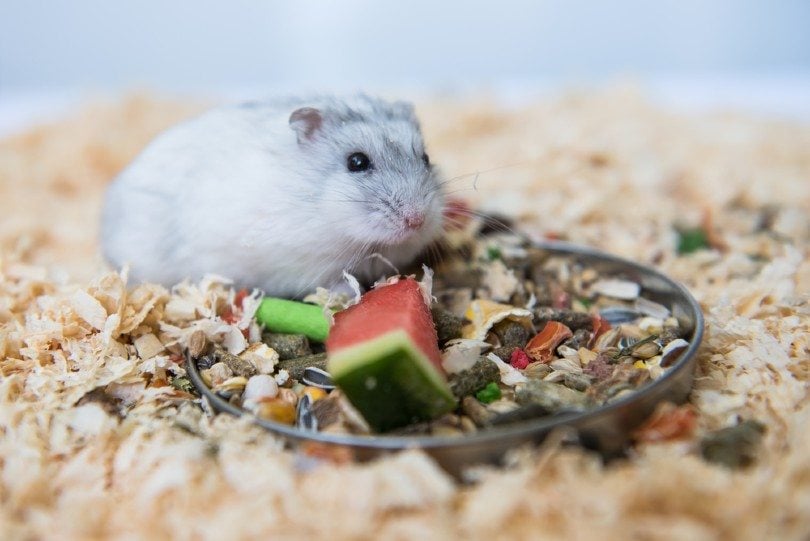
If you accidentally give your chinchilla a bit of hamster food, don’t panic. It probably won’t cause serious damage, though it could lead to short-term gastrointestinal distress. And you must keep a close eye on your chinchilla to ensure she does not develop a bloat, especially if your hamster food is a mix that contains seeds, grains, and dried fruits.
If you feed hamster food to them for a long period of time, however, your chinchilla will develop health problems and could die as a result. From too little fiber leading to gastrointestinal stasis and constipation to the excessive proteins and fats causing overweight, liver problems, or metabolic imbalances, to your Chinchilla.
The detail here is that while chinchillas mostly eat hay and other grasses, they are herbivores, while hamsters are opportunistic omnivores; their pelleted diet has a different macronutrient composition, and many of their mixes even contain nuts and seeds. Nuts and seeds are high in fats, which can be devastating for your chinchilla’s long-term health, so don’t even give them hamster food as an occasional treat.
As a general rule, hamsters need less fiber, more protein, fat, and carbs than chinchillas do. That’s why chinchilla pellets are so different from hamster pellets and why you should never substitute one for the other.
What Do Chinchillas Eat?

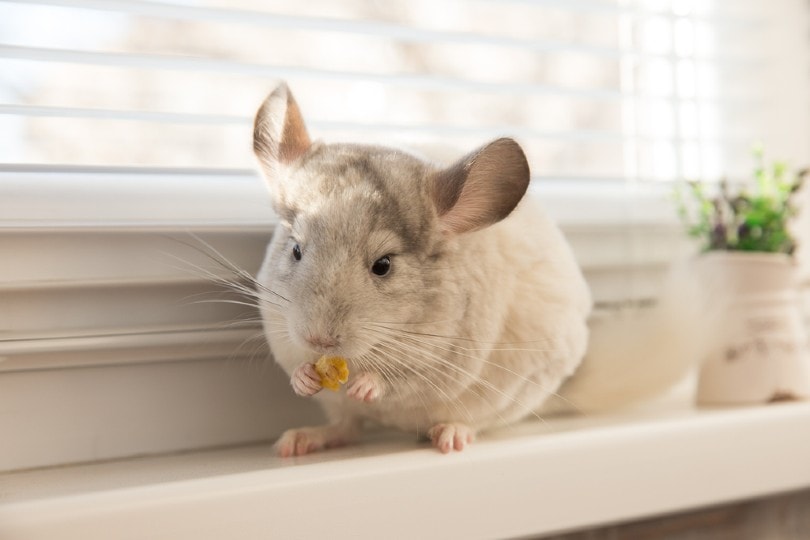
Chinchillas don’t have exciting and varied diets. Between 80% and 90% of your chinchilla’s diet should consist of timothy hay or a similar grass hay. No matter what else you feed your chinchilla, hay should be the bulk of their diet and should always be readily available.
In addition to having all the vitamins and minerals that your chinchilla needs, hay is important because it helps file down their teeth. Like those of most rodents, chinchillas’ teeth never stop growing, and if you don’t give them something to help file them down, they can suffer serious health issues as their chompers become overgrown.
There are also commercially produced chinchilla pellets that you can buy online or at most pet stores. This food is specially designed for chinchillas and has the nutrients that they need, but it should still only make up a small portion of their diet.
Beyond that, you can give your chinchilla the occasional bit of dried root vegetables, such as carrots or parsnips, or dried herbs such as chamomile, hibiscus flower, or dandelion leaves as a treat. Avoid store-bought chinchilla treats, as these usually have little nutrition and can be quite fattening. Excessive pellets can increase your chinchilla’s waistline too, which is why they should only make up a small portion of your pet’s diet.
What Can I Feed My Chinchilla in an Emergency?
If you run out of chinchilla food, you may be able to scramble up a replacement meal using ingredients in your own house, but it’s important that you know what you can and can’t feed your pet.
Resist the urge to double up on the chinchilla pellets, as they can upset your pet’s stomach and cause stomach issues. Instead, offer your chinchilla dried safe herbs or root vegetables, but you must be certain they are safe and clean.
You may also be able to give your chinchilla treats like rose petals or one flake of rolled oats.
It’s also worth noting that your chinchilla will probably be fine if they miss a single meal. You should try to get hay for them as soon as possible, of course, but don’t worry about them dying because they had to skip supper one night. However, do get moving to find that hay because if a chinchilla stops eating for even 12–24 hours, they are at risk of developing gastrointestinal stasis, a condition where the digestive tract slows down or stops altogether. This can quickly lead to bloat, dehydration, liver fat accumulation, and death if not treated promptly.
Are There Any Foods That I Should Never Feed My Chinchilla (Besides Hamster Food)?
There are quite a few foods that should never be given to your chinchilla, and the list can be quite counterintuitive. If you’re not sure if your chinchilla can eat something, it’s always better to look it up than take the chance.
- Asparagus
- Cabbage
- Avocadoes
- Peas
- Spinach
- Corn
- Rhubarb
- Bananas
- Sunflower seeds
- Peanuts
You should also be careful with fruits. Most fruits are full of moisture, and consuming that much water all at once can cause digestive issues for chinchillas. On the other hand, dried fruits are almost pure sugar, and that’s not good for chinchillas either.
Ultimately, what we’re saying is that you should try hard not to run out of hay.
Verdict
While chinchillas and hamsters may seem similar, their diets couldn’t be more different, and that means you should never give your chinchilla food made for hamsters.
It’s not poisonous to them or anything, but it can wreak havoc on their digestive tract, and over time, they’ll become malnourished and can even die.
Chinchillas have highly specialized and, therefore, surprisingly sensitive digestive tracts, and you should do your research before feeding them anything. When in doubt, though, just give them hay.
See Also:
- Can Chinchillas Eat Rabbit Food? What You Need to Know
- Can Chinchillas Eat Guinea Pig Food? What You Need to Know
Featured Image Credit: Denis Tabler, Shutterstock