







Click to Skip Ahead
Chinchillas need a diet based on hay in order to maintain adequate digestion and keep their teeth at the perfect length. On the other hand, fruits should be avoided as treats because they are quite high in sugar. For example, apples are healthy for us, but they aren’t the best options for our furry friends.
Apples aren’t that high in sugar, but chinchillas are extremely small, so even a small amount of added sugar is significant to them.
A chinchilla should have a diet that is high in fiber. As pets, they are often fed hay of some sort, such as timothy hay or similar low-calcium hay, as high-calcium hays can predispose for bladder stones, and are only offered to pregnant, nursing, or growing animals.
If you want to understand why apples are not a good choice for your Chinchilla, you must understand their overall diet.

What Should Chinchillas Eat?
Chinchillas should eat mostly hay. Many types of hay are good options for them, including timothy hay, oat hay, and meadow hay. Hay should be provided as a 24/7 option for your chinchilla. They should be able to eat as much of it as they want.
You should avoid high-calcium hays like alfalfa in adult Chinchillas. These can often potentially cause kidney and bladder problems because a chinchilla’s system is not designed to withstand high amounts of calcium. Alfalfa can be offered to pregnant, nursing or growing animals only.
Furthermore, chinchillas can be fed a small amount of species-specific high-quality pellets each day. These should be made for chinchillas specifically and provide all the nutrients that your chinchilla needs.
You should not make sudden changes to your chinchilla’s diet, however. They are known for having extremely sensitive digestive tracts. Therefore, sudden changes can cause digestive upset, which can become quite serious in some cases.

What About Apples?
Apples do not have any place in the bulk of a chinchilla’s diet. They are not hay nor pellets, which are the two substances that your chinchilla should be eating the most of.
Chinchillas do not need apples, though. In fact, they don’t need any treats at all. Many owners feel the need to provide them with a bit of meal variety, though, and a few treats can provide that. Best treats in that case would be rosehips, dried chamomile, nettle or dandelion in moderation on a weekly basis. Apples are too high in sugar for Chinchillas to safely enjoy, and are unlikely to provide them with any significant benefit.
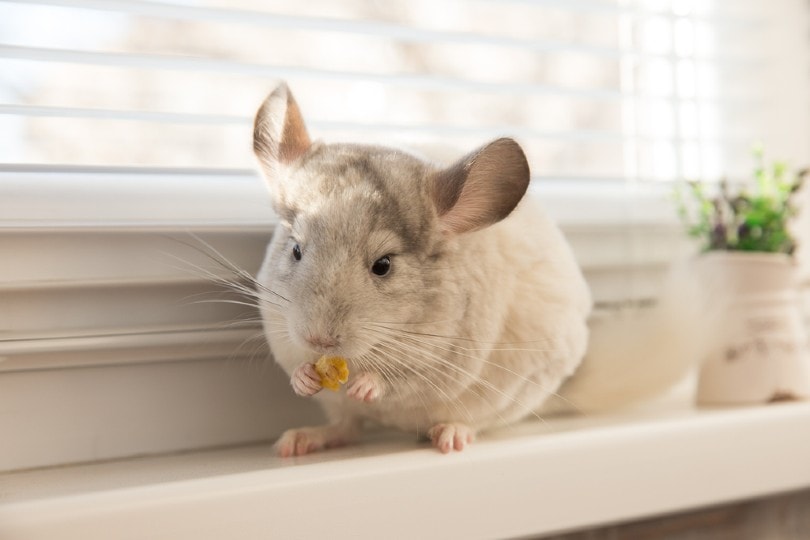
Can Chinchillas Eat Apple Skins?
Nope. The same applies to apple skins as it does to apples, and the main reason against feeding them to Chinchillas is the sugar content. Besides this, apple skins may be contaminated with various pesticides and may pose a choking hazard.
What Happens If My Chinchilla Eats A Piece Of Apple?
As already mentioned, apples are best kept off the menu when it comes to Chinchillas. However, if your Chinchilla gets a hold of a piece of apple by accident, it’s unlikely to cause them serious harm. Regardless of that, making it a regular treat is unnecessary and can be damaging to their dental and digestive health.
The acidity of the apple, combined with the sweetness, often leads to digestive complaints. Since chinchillas are so sensitive, even a very small amount of apple can cause significant issues.
If your Chinchilla seems lethargic or is refusing food, not defecating or having loose stools, bloated or tense abdomen, get them seen by the emergency vet immediately.

How Often Can Chinchillas Have Treats?
Preferably, it is best to spread out any safe and appropriate treats that your chinchilla eats throughout the week. You don’t want them to consume too often because they don’t need it, and treats may cause digestive problems. It is almost always best to provide them with small amounts spread over a longer period. Consult with your vet about the safest treats for your Chinchilla, as there aren’t many commercially available.

What Other Fruits Can a Chinchilla Eat?
Chinchillas do best on high-fiber and should avoid fruits, even as tiny treats. These can cause significant digestive upset because your pet may be unable to handle the excess water and sugar content.
As much as it seems that your Chinchilla would enjoy a fruity snack, the reality is that they don’t need them and may experience adverse reactions. Their digestive system is used to fiber they receive through hay, and this is everything they need to stay healthy. A small amount of species-specific pellets serves as a nutritional boost, but there is really no need for fruits. Treats you could consider include small amounts of certain dried herbs, rosehips, dandelions, chamomile, and nettle.
Conclusion
Chinchillas should not consume any amount of fruit if possible. If they do, it may cause digestive upset. Over time, it can lead to dental, digestive, and weight problems. If your chinchilla is consuming too much fruit and not eating enough hay or pellets, they will develop health issues.
Apple isn’t particularly nutritious for chinchillas, and they don’t have a place in a chinchilla’s diet.
- Next on your reading list: Can Chinchillas Eat Bread? What You Need to Know
Featured Image Credit: Suzanna Fonaryova, Shutterstock