







If you are looking for delightfully crunchy treats for your horse, cucumbers, like most veggies, have the nourishment that equines require. What’s more, cucumbers are safe for horse consumption, especially if they are organic or homegrown.
Cucumbers have vitamins, minerals, low-calories, and low sugar, which are dietary values suitable for horses with weight gain and insulin-resistance problems. However, just like other foods, there are things about horses and cucumbers that horse owners should pay attention to.
Keep reading and find out whether or not these veggies are the correct diet choice for your horse.

Health Benefits of Feeding Cucumbers to Horses
1. High in Nutrients
Chopped and unpeeled cucumbers have vitamin A, C, D, K, potassium, and calcium. These vital vitamins and minerals contribute to good bone health in horses, helping during the animal’s vigorous activities.
Better still, cucumber skin provides horses with a bit of natural dietary fibers that aid in digestion.
2. Contains Antioxidants
Cucumbers have moderate amounts of beneficial antioxidants, components that help reduce inflammation in an equine’s body.
3. Rich in Water
While horses require drinking water to stay hydrated, they also benefit from moisture-rich foods to supplement their daily fluid needs.
Cucumbers are made up of up to 95% water, making them especially useful for horses that require extra hydration.
4. Low Carbs and Sugar Content
Cucumbers are low in calories, have low carbs, and low sugar content, which means that horses can enjoy them in moderation without packing on extra calories that may lead to weight gain. Moreover, their low sugar and calorie content makes them a great treat for overweight or insulin-resistant horses, in moderation.

Health Risks of Feeding Cucumbers to Horses
Causes Bloating and Gas
Overfeeding cucumbers to your equine companion could lead to elevated potassium levels and compounds like cucurbitacin, which may cause intestinal gas build-up.
Did you know that horses cannot burp, belch, or vomit? Their esophagus only allows movement in one direction, so if they eat something that disagrees with them, it can cause discomfort or even colic. Although colic might sound like a minor problem, it can rapidly progress to intestinal torsion, severe bloating, and even rupture, so abdominal discomfort in your horse should never be taken lightly, and should always be attended to by a vet.
Precautions When Feeding Cucumbers to Horses
1. Limit the Quantity
As much as cucumbers are fibrous, rich in water, and contain vital nutrients, you should offer them to your horses in moderation. Consider it a treat and provide only one or two cucumbers a week.
This precaution is vital, especially since the veggies can cause gastrointestinal complications. Regulating the quantities will offer the horse’s digestive system stability and consistency, preventing gas build-up and colic.
2. Mind the Sizes
Of course, horses have large teeth that can bite cucumbers into chunks. The problem with whole cucumbers is that they could be hard to chew and swallow. These animals can also still miss chewing extra small sizes, leading them to swallow them whole and choke.
Prepare the veggies in standard sizes to allow chewing and easy digestion. Slice them large enough for horses to chew to prevent the equines from choking; about six to eight pieces per cucumber should be okay.
And, if your horses are having teeth-related issues, consider grinding it to mix with their grain instead, as the crunchiness could harm them further.
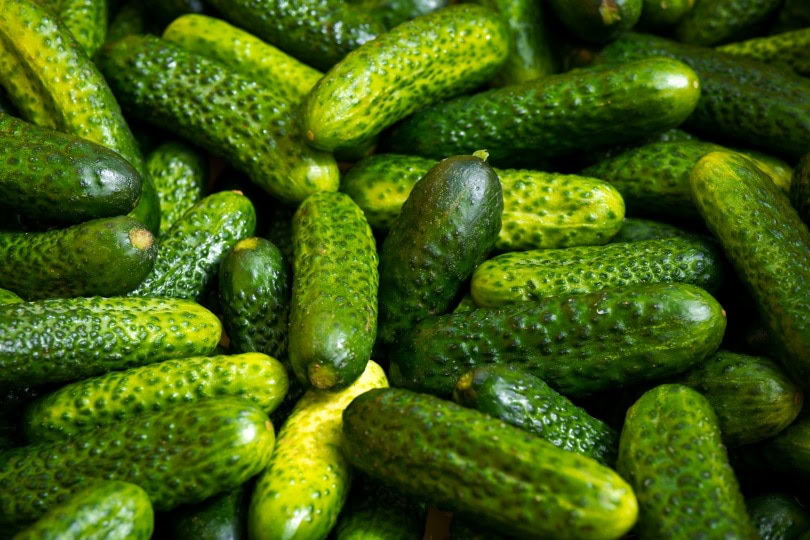
3. Wash Commercial Cucumbers Thoroughly
Although cucumber skin is essential, it may harbor toxins from chemicals and pesticides that farmers spray the crops with while on the farm.
If possible, consider growing your cucumbers using organic fertilizers, or better still, buy them from organic markets. However, if you can only find the veggies in stores, be sure to wash them thoroughly.
4. Introduce the Veggies Gradually
The most vital thing to do is to ensure your horse is not displaying signs of food sensitivity. You can prevent this by introducing the vegetable to your horse’s diet slowly and in small amounts as you watch over them for any signs of distress.
Watch for signs like lethargy, pawing on the floor, rolling, losing appetite, pooping less than usual, suspicious gut noises, increased sweating, and problems passing urine, which may indicate colic.
5. Not All Horses Require Cucumber
Avoid giving cucumbers to horses with gastrointestinal issues as these veggies may escalate the problem. Also, do not feed cucumbers or any potassium-rich food to equines that suffer from hyperkalemic periodic paralysis (HYPP). Unfortunately, cucumbers and other high-potassium foods can raise the horse’s potassium levels and cause adverse side effects.
Unfortunately, cucumbers and other high-potassium foods can raise the horse’s potassium levels and cause adverse side effects.
Wrapping Up
Your horse will undoubtedly love the refreshing taste of a crunchy cucumber in its feed. Thankfully, these vegetables are generally safe for most horses when offered occasionally.
However, as with all treats, it is best to keep your horse’s cucumber intake in moderation, perhaps once or twice a week. When fed appropriately, cucumbers can provide light hydration and are low in calories, carbohydrates, and sugar. These qualities make them a suitable treat for horses that are overweight or insulin-resistant, as long as they’re part of a balanced diet.