






Click to Skip Ahead
It’s no secret that cats and dogs don’t always see eye to eye. Felines are often caught hissing, growling, and hitting their adversaries. Dogs, in turn, bark, whine, and may bite. However, whether a dog and a cat will get along depends on many factors, including the individual animal’s character, previous interspecies experiences, early socialization, and many more. For example, the Munchkin cats tend to be loving, playful, and tolerant of other pets, including dogs. That said, every cat is unique, and some Munchkins may still prefer to keep their distance. The key factor is how introductions are handled: with patience and respect for each pet’s comfort zone.
And the best tool in a pet parent’s hands is, of course, early socialization. With the right approach, many Munchkin cats can learn to see dogs as playmates rather than rivals. So, how do you build the foundation for that? We have the answers right here!

Munchkin Cats: A Genetic Mutation
Officially recognized by The International Cat Association (TICA) in 1994 yet documented since the 1940s, the Munchkin is a fascinating cat.1 It has a unique physical appearance caused by a spontaneous mutation causing a condition known as Chondrodysplasia: the legs of a Munchkin kitty are 2–3 inches shorter compared to most felines. As an autosomal dominant trait, a kitten only needs to inherit one copy of the mutation to display the Munchkin proportions. In fact, if two copies of the mutated gene are inherited (ie. both parents contribute a copy of the mutated gene), the fetus will not survive.
The breed is controversial, and many animal welfare organizations and veterinary professionals oppose its continuation on welfare grounds.
Do These Cats Get Along With Dogs?
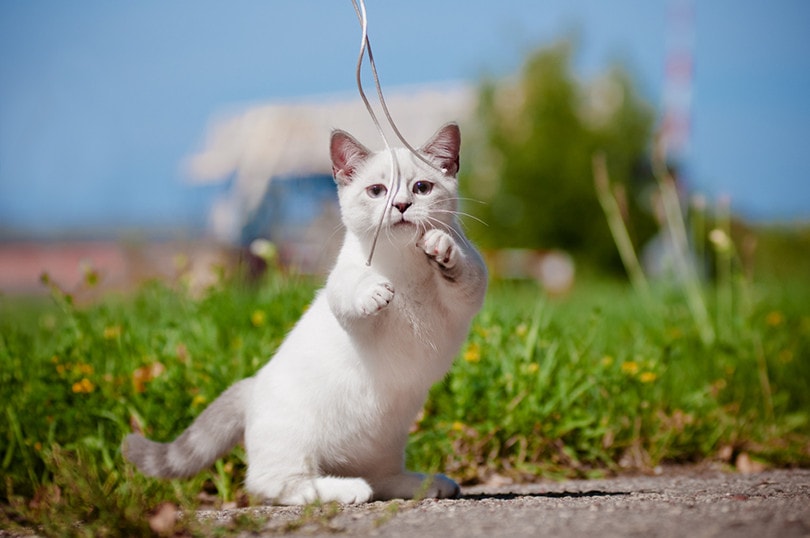
While it’s not easy to predict, many Munchkin owners report that these cats are quite agreeable and get along with other pets, including dogs.
One of the best things about Munchkin cats is their peaceful, positive energy. They are quick to find common ground not only with humans but with canines as well. While it won’t always be “love at first sight”, Munchkins tend to be good with dogs.
How Can You Help “Break the Ice”?
Even if you’re the proud owner of a friendly doggo like a Spaniel or Golden Retriever, you’ll still need to take certain steps to ensure a smooth and friendly start with your Munchkin cat.
- Set up safe zones. When the cat first arrives at the house, make sure they both have their own safe space, ideally in separate rooms where the dog can’t reach it. While the Munchkin is, indeed, an open-hearted, sweet-tempered cat, it might still be a bit intimidated by the canine that’s been living with you for a while.
- Feed separately. Feed them separately at the beginning, in their own private space.
- Scent comes first. Before they ever meet face-to-face, let the cat and dog get used to each other’s smell. Swap toys or pieces of bedding and place them in the other pet’s area. This way, both learn the other’s scent in a safe, positive context. Once they stay calm with the swapped scents, you can let them hear and sniff each other through a closed door or baby gate while keeping things stress-free.
- Leashed, short sessions. When you’re finally ready to introduce both pets, do it on neutral ground, a room that the pets will share later. The dog needs to be leashed, even if it’s a tiny pooch. Do this for a few minutes, or less, 2–3 times a day for a week or so to establish a trusting relationship.
- The final stage. Alright, now you can remove the leash. Don’t leave the room just yet, though. The moment you notice any signs of unfriendliness or aggression, go a few steps back and try again. Yes, this could take a while, especially if the furry friends are adults, not pups/kittens.
Do Munchkin Cats Take Long to Adapt?
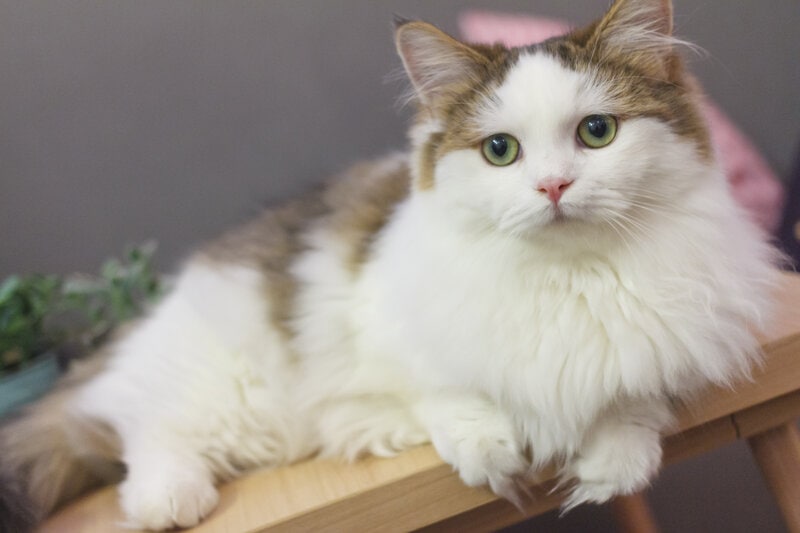
Naturally, this breed tends to adapt more easily to new faces and environments. However, since Munchkins enjoy so much human contact, they generally don’t like to be left alone for long periods of time.
Tips for Keeping a Munchkin Cat Safe
Another thing that makes these felines stand out is their kitten-like behavior. In contrast to most cats that mature quickly, Munchkins stay curious and playful well into their adult years. So, don’t be surprised by a fully-grown Munchkin cat’s desire to explore every single corner of the house and “stash” things they like.
- Safety first. Dogs are much stronger than cats, but felines are incredibly flexible and can escape by climbing up a tree, roof, shelf, and whatnot. Sadly, that’s not always the case with the Munchkin cat, as they’ve got short legs. That’s why it’s so important for them to have personal space where they’re 100% safe and undisturbed, as well as hiding spots with easy access, although they are reasonably agile. It’s important to supervise all interactions between your dog and the Munchkin cat.
- Understand your dog. Some dog breeds, like Terriers and Greyhounds, might be less likely to tolerate a feline in the house without careful and gradual interactions. Make sure you learn how to read their body language and take all the time and effort necessary to allow safe introductions and co-living.

Health Problems
Munchkin cats suffer from a form of dwarfism called achondroplasia or chondrodysplasia. Some Munchkins suffer chronic pain because of this; others aren’t really affected as much. Still, this is one of the reasons why breeding Munchkins is prohibited in many countries.
Here’s a list of the most common health issues:
- Limb Deformity & Arthritis. Munchkins are defined by their shortened legs, the result of a genetic mutation affecting bone growth. As kittens and young adults, many show normal mobility and can run, climb, and play like other cats. However, because of their limb structure, they are at higher risk of developing osteoarthritis at an earlier age than typical cats. Arthritis causes stiffness, pain, and reduced ability to jump or move comfortably, and it can significantly affect quality of life as they age.
- Juvenile or Fetal Death. The gene responsible for the short legs is inherited in a dominant pattern. If a kitten inherits one copy of the gene (from one parent), it will be born with the Munchkin trait. If it inherits two copies (from both parents), the embryo usually does not survive and is reabsorbed in the womb. For this reason, breeding two Munchkins together is considered unethical and is associated with poor welfare outcomes.
- Lordosis. This is an excessive downward curvature of the spine, typically in the lower back (lumbar) region. It results from abnormal vertebral development and can cause weakness or even paralysis of the hind limbs in severe cases. While there have been reports of lordosis in Munchkin cats, it is unclear whether the breed is more predisposed than others, as the condition is rare overall.
- Pectus Excavatum. This is a congenital malformation where the breastbone and ribs grow abnormally, creating a sunken appearance of the chest. Severity can vary: some cats may show only mild changes, while others suffer from restricted lung capacity, difficulty breathing, or reduced survival. Although reports suggest it may be seen in Munchkin cats, this hasn’t been proven to occur more commonly in them than in other breeds. Severe cases may not be compatible with long-term health or survival.

Conclusion
Despite their physical and genetic problems, Munchkins are known for being affectionate and easygoing cats that don’t immediately view the family dog as a threat. By taking things slow and allowing both cat and dog plenty of space, there is a good chance you could witness the start of a beautiful friendship.
Thanks to social media, cats like the Munchkin, with problematic deformities and genetic mutations, are experiencing a surge in popularity. If you’ve got your heart set on one of these short-legged felines, consider reaching out to animal shelters and rescue organizations before spending money on a kitten that, by its very nature, will be born with health problems.
Featured Image Credit: Phannasit, Shutterstock