







Click to Skip Ahead
Managing a cat’s litter box isn’t the most fun task of feline ownership—but it’s certainly a must, much like the dishes you have to do after dinner or the laundry that’s been piled up for a week. So, how often should you clean a litter box to keep everything as fresh as possible?
Ideally, you should clean your cat’s litter box daily—especially if you have multiple cats. However, there are differences between full changeouts and spot cleaning. In this article, we will discuss the details so you can keep your cat’s potty area (and the whole home) less nose-wrinkling.

The 5 Tips on How Often to Clean Your Cat’s Litter Box
1. Consider How Many Cats You Have
How often you should clean your litter box greatly depends on how many cats you have and how many litter boxes there are to clean. If you have more than one litter box, you ideally want to check them daily. You might need to clean multiple times a day if you have a limited amount of litter boxes.
Most professionals recommend having one litter box per cat in the home, plus one. For example, you’d need at least five litter boxes if you have four cats. This can seem like a lot of litter boxes in the home, but it helps avoid territorial behavior surrounding litter boxes.
Plus, they don’t fill one up as quickly, and spot-cleaning is easy. Coming home every day to three cats using one litter box can fill up quickly and lead to daily full litter changes. However, if it is spread out, you can do light maintenance. Other recommendations for the number of boxes in a house do exist, such as one box for every social group. Speak to your cat’s vet for further recommendations.
2. Know When to Spot Clean
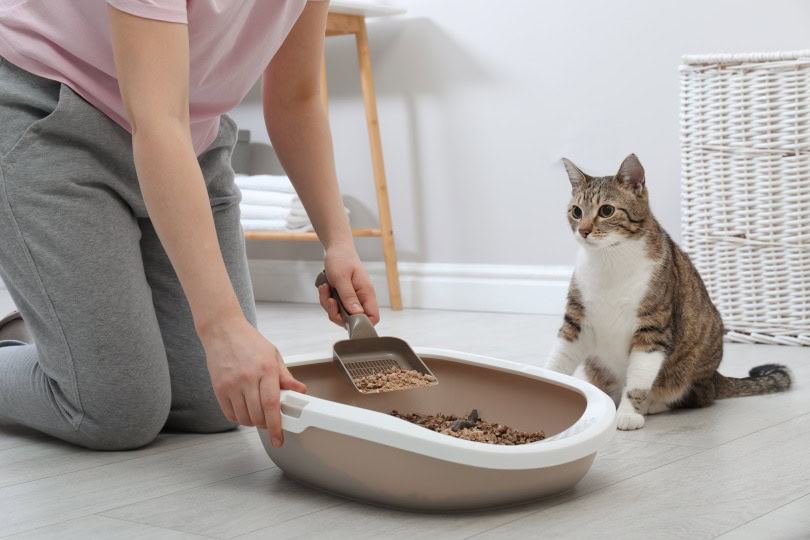
Ideally, it would be best if you spot-cleaned your litter boxes at least once every day, and possibly multiple times. This can allow you to stay ahead of things to control odor and reduce the mess in your household.
Spot cleaning should only take you a few minutes and will be easy to remember once you get in a routine. You can have poop bags prepared for quick cleanings so you can make it all convenient and in one spot.
3. The Type of Litter Matters

Certain litters stay fresher longer than others. That is primarily due to their composition. If you have a clumping litter, it will tightly compact around the waste. This really helps with sifting and cleaning as well as keeping litter cleaner longer.
If you have another substance, such as pellets or crystals, more of the litter might get dirty due to lack of clumping. People choose non-clumping or clumping litter based on preference. Oftentimes, people don’t mind the extra dirtying of the non-clumping litter because it provides less tracking. Or people might get really sick of cleaning out a litter box or smelling exposed waste and prefer clumping varieties instead.
Also, there are quite a few materials to choose from. Clay is traditional, but there are many more these days.
- Clay
- Crystal
- Recycled paper
- Coconut husk
- Walnuts
4. The Type of Litter Box Matters
You might have to do a whole lot less work if you choose a litter box that does a lot of the cleaning for you. Or, if you have one cat and really don’t mind daily cleanings, you can have a standard litter box. The type of litter box you get is your preference.
Automatic
Automatic litter boxes work on a timed or censored function. They sometimes have compatibility with certain smartphones, so you can monitor your cat’s bathroom habits. You can get straightforward automatic litter boxes, or you can get more expensive, high-tech versions.
Ultimately, you will buy the type of automatic litter box to fit your particular needs.
It is worth noting that some cats don’t like automatic litter boxes. No matter how convenient they are for you, if your cat doesn’t like them, they’re simply not a good choice.
Traditional
Traditional litter boxes usually consist of a plastic base with an optional hood. Some have total enclosures, while others have a single wall or shield to prevent litter from flinging.
Other
You can also get litter boxes that double as furniture pieces, fit inside of totes, or even disguise as plants. You can even create a ton of DIY options that fit the needs of your particular home setup best.
5. Know When to Do a Full Change
Knowing when to change your cat’s litter box fully is important to conserve litter and create a schedule. If you have a single cat, you should completely change the contents of their litter box at least monthly or even more frequently, depending on your cat’s bathroom habits.
If you have multiple cats, you might have to do a full change more frequently than that, between 2 and 3 weeks. Remember—your nose is always the best judge. If you can smell it, so can your cats!
Monitoring Bathroom Habits
It may not seem like it, but pay attention to your cats. Bathroom habits are more important than you might think. A cat’s waste can tell us a lot about how our cat is feeling. If your cat is sick, has parasites, or any other concerning potential issues, you might notice that their poop looks different or changes consistency. Similarly, with urine clump sizes, if you use clumping litter. If the clump size changes or becomes more or less frequent, it is time to consult your veterinarian.

Final Thoughts
It would be best if you spot-cleaned your cat’s litter box daily. Not only will this decrease odor, but it also keeps the litter fresh for longer. If you have multiple cats, the frequency of litter changes can increase significantly.
Purchase the best litter for your home and keep a watchful eye on it. Once you get into the routine, you should be able to scoop your cat’s litter box as needed.
Featured Image Credit: New Africa, Shutterstock