







Burmese Cats are well known for playful temperaments, velveteen coats, and unique gold eyes that seem to stare into your soul. The breed is charming and loving and will worm its way into your heart in no time. If you’ve found yourself wondering what colors the Burmese comes in, the answer will depend on who you ask.
Whilst the Cat Fancier’s Association (CFA) only recognizes four color patterns for the Burmese Cat breed: sable, champagne, blue, and platinum, The International Cat Association (TICA) recognises a range of solid and tortoiseshell colors.
In this guide, we’ll examine 10 Burmese coat colors and give you a rarity status for each. As explained, not all of these coats are recognized by the Cat Fancier’s Association, but regardless of the coat color and pattern, the Burmese is a remarkable feline with unforgettable charm and appeal.

The 10 Burmese Cat Colors & Patterns
1. Platinum

| Recognized by CFA: | Yes |
| Rarity Status: | Standard |
The platinum Burmese cat breed is recognized by the Cat Fanciers Association. They are the lightest of the Burmese cat colors and have a lighter color on their underbelly and on their chest. Their platinum fur is highlighted by the dark hair on their extremities, like Siamese cats.
Platinum is a breed standard, but it’s not as popular as some of the other colors on our list.
2. Lilac

| Recognized by CFA: | No |
| Rarity Status: | Rare |
The Cat Fancier’s Association does not recognize the lilac Burmese. These cats feature a slight purple on their faces, paws, and tail, in a hue that’s difficult to see. The kittens can have a brown tint to their faces at birth, but this tends to fade as they age.
Because lilac isn’t an officially recognized color, you won’t pay as much for this cat. However, they are rare and hard to get with their soft brown color and pink and grey tinge. Lilac is an exceptionally unique color pairing, and you’ll be lucky to find one to call your own.
3. Cream

| Recognized by CFA: | No |
| Rarity Status: | Rare |
The cream Burmese cat is another rare color pattern. This adorable cat is blonde with a cute pink nose. They also have a darker color on their eyes and heads. The color is recognized by TICA. Their color is warm deep cream with hints of apricot. Because of its rarity, a cream Burmese may be difficult to find.
4. Lilac (Tortoiseshell)

| Recognized by CFA: | No |
| Rarity Status: | Rare |
The lilac tortie Burmese’s color is lighter at the base and has dark flecks peppered throughout its fur, with a blend of dove-grey, apricot, and cream patches. Because the “O-gene” responsible for tortie coloring is gender-linked, all lilac tortie Burmese cats are female. They are much lighter than most Burmese Cats, except for the platinum cat, and they are not recognized by the Cat Fancier’s Association.
5. Blue (Tortoiseshell)

| Recognized by CFA: | No |
| Rarity Status: | Rare |
Who wouldn’t love to give a blue tortoiseshell Burmese a forever home? While the Cat Fancier’s Association doesn’t recognize these cats, they are gorgeous and a joy to have around. This breed has a darker body with gray flecks scattered throughout its fur. However, just like with other tortie cats, the exact color and pattern are different for each cat.
Blue torties are extremely popular cats but are less popular than the Burmese with solid blue coats. The biggest advantage of getting a blue tortie Burmese over a solid blue Burmese is the price. Blue tortie Burmese Cats are rare, so if you find one, hold onto them tightly.
6. Brown (Tortoiseshell)

| Recognized by CFA: | No |
| Rarity Status: | Common |
The brown tortoiseshell Burmese is a common color that’s easy to find. This cat has a dark brown color, with darker brown flecks scattered over its body.
The brown tortie is more affordable than the cats with breed-standard colors, and in most cases, they’ll be easier to locate and adopt. If you’re looking for a brown tortie Burmese, you can easily find one through a breeder and maybe even at the local rescue shelter.
7. Chocolate (Tortoiseshell)
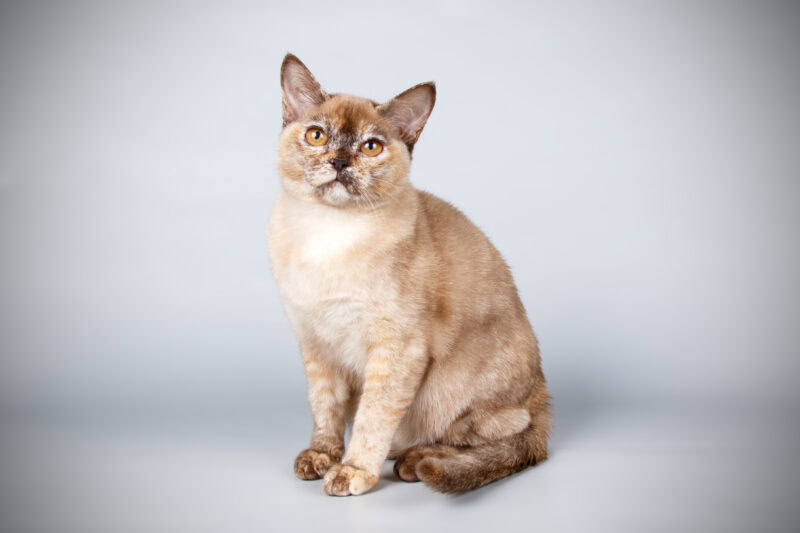
| Recognized by CFA: | No |
| Rarity Status: | Common |
If you’re looking for an incredibly beautiful feline, the chocolate tortie Burmese should be at the top of your list. The chocolate tortie is a darker shade of the sable Burmese combined with the lighter color of the champagne Burmese, which we’ll discuss below. The cat’s body has sable coloring, and there are beige flecks scattered throughout. Again, the exact color pattern will depend on the cat. The color of this cat is gorgeous, but they aren’t often sought after by breeders because they aren’t recognized or have a solid color.
8. Champagne

| Recognized by CFA: | Yes |
| Rarity Status: | Standard |
The champagne Burmese is a CFA recognized color pattern. This cat’s fur is a creamy color that quickly fades into ashy brown shades that are darker in color.
Kittens may seem to be a lighter color at first, but they darken up as they age. This color pattern is lighter on the underbelly and on their chests, then darker around the paws, face, tail, and ears. Champagne Burmese are extremely popular, but they’re not too hard to find.
9. Blue

| Recognized by CFA: | Yes |
| Rarity Status: | Very Sought After |
Blue Burmese cats are incredibly popular, and everyone wants one. The Cat Fancier’s Association recognizes them, and the cats have a solid medium blue-gray coat that gives them a striking, elegant appearance.
10. Sable

| Recognized by CFA: | Yes |
| Rarity Status: | Standard |
The sable Burmese cat is the original, meaning it is the color they were bred to be. For this reason, they might be more expensive, depending on the breeder.
Since sable, sometimes called brown, is the original color, it is recognized by the Cat Fancier’s Association. The color is gorgeous and should not be difficult to find as it’s typically bred by most Burmese breeders.
Conclusion
As you can see, the Burmese certainly comes in quite a few patterns and colors. While price may vary, they are all great pets to give a forever home.
The Burmese color patterns that are formally recognized will cost you more from the breeder than the unrecognized colors, but regardless of the cat’s fur, you’ll enjoy a long, loving relationship with the extraordinary Burmese cat.
Featured Image Credit: Elena Kabenkina, Shutterstock









2 Responses
Is There Solid Black Burmese Cats ? With
Really Bright Yellow Eyes?, And What Catagory Would You Place This Burmese Cat In ? Thank You
Hi Dawn,
Our friends over at Catster have a great article on black burmese cats that should give you the information you need.