







Are you looking for a colorful feathered companion to have as a pet? Perhaps the lovebird would be a great choice for you. These birds belong to the parrot family and can live up to 15–20 years. They thrive when kept in pairs because they develop close-knit bonds with each other and even with people, hence their name. Lovebirds are intelligent, affectionate, and well-known for their vibrant colors. In fact, their blend of colors is often what catches people’s eye when they’re considering which bird to adopt.
A lovebird’s plumage consists of a combination of colors on their body and face, ranging from green, yellow, peach, orange, violet, and teal to white. Their beaks are typically either a creamy off-white or vibrant red, with some variations in between. While these adorable parrots may be found in dozens of different colours, we’ve created a list of the most common, any of which would make great pets.1

Top 5 Lovebird Color Mutations
1. Peach-Faced Lovebirds
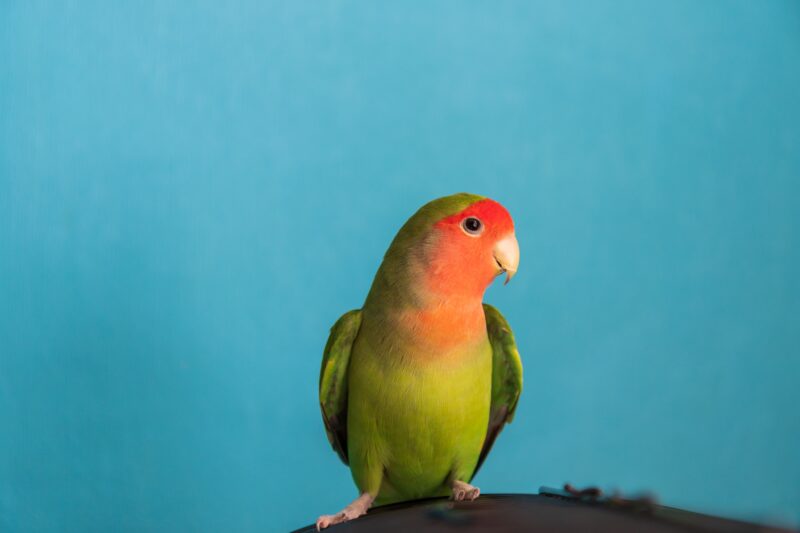
The peach-faced lovebird, or rosy-faced lovebird, is a distinct species (Agapornis roseicollis) that got their name due to their distinct coloring. They have rosy pink or peach-colored faces and throats. This color may extend to the forehead. The plumage on the rest of their bodies is a vibrant to dark green. Some color mutations have yellow-colored chests. Their beaks are off-white.
2. Fischer’s Lovebirds

Also known as the eye-ring lovebird, this species of lovebird, Agapornis fischeri, has a color combination of green, yellow, and orange, with the signature white circle around their eyes. Both sexes usually have the same color pattern. The plumage on their backs, chests, and wings is a vibrant green, slowly fading to golden yellow and then a dark orange color at their neck. The tops of their tails can have some blue or purple feathers.
3. Black-Masked Lovebirds

Like other lovebirds, the black-masked lovebird (Agapornis personatus) gets their name from their distinctive black masking on their face with prominent white rings around their eyes. However, these birds are also known as yellow-collared lovebirds due to the yellow plumage on their necks and upper chests. The rest of their bodies have the signature bright green plumage, with their tails sometimes having some blue accents. Their beaks are a vibrant red.
4. Blue Lovebirds
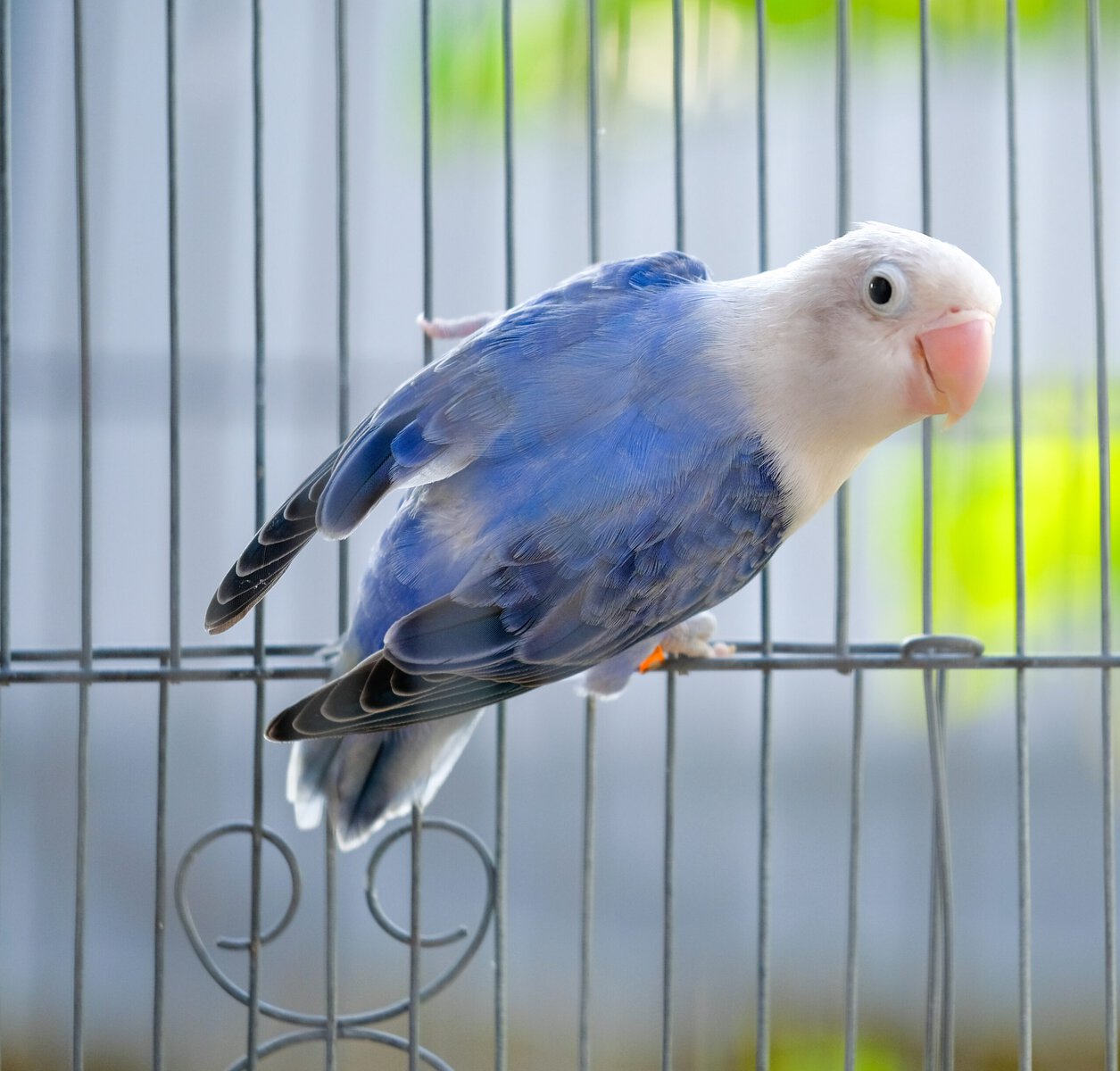
The blue lovebird is not a separate species but a color mutation of the peach-faced lovebird (A. roseicollis). Its plumage varies from light blue to turquoise, with a white or grey face and chest, and a light, peach-colored beak.
5. Australian Cinnamon & Orange-Faced Lovebirds

The Australian cinnamon and orange-faced lovebirds are another mutation of the peach-faced A. roseicollis, and have similar color patterns to Fischer’s lovebirds. They have red and dark orange plumage on their faces, which changes to yellow around their necks and part of their upper chests. The rest of their bodies are the classic lovebird vibrant green. What makes this lovebird stand out is that cinnamon mutations may have lighter plumage, but unlike Fischer’s, they do not have the distinct white eye ring. Peach-faced lovebirds, including orange-faced and cinnamon mutations, have dark brown eyes throughout life. They do not develop ruby-red eyes as juveniles, and their plumage remains bright into adulthood.
Final Thoughts
There are other lovebird colors, but these are the most common among the lovebirds available as domesticated pets. Other species of lovebirds live in the wild and are amazing to watch, but most are not commonly kept as pets because some species are less adaptable to captivity and may not thrive outside their natural environment.
No matter which color variation or mutation your lovebird has, they will be vibrant and lovely to look at. In addition to their affectionate nature, the plumage of the lovebird helps make them a popular and well-loved pet.
Featured Image Credit: Tracy Starr, Shutterstock