






Click to Skip Ahead
While pigs on farms are generally used for their meat, mini pigs are having a moment as animal lovers everywhere learn about these pint-sized pigs. These adorable pets are smart, social, and super friendly. However, as cute as they are, mini pigs come with their own unique care needs. They shouldn’t be treated like dogs or guinea pigs.
Before you add a mini pig to your home, here is everything you need to know about caring for this lovable creature.

Mini Pig Facts

- Mini pigs are not so mini! Adults are around 18 – 24 inches tall, and weigh 90 – 150 lbs.
- Mini pigs are emotional creatures and need plenty of love from their human family.
- Mini pigs actually have dreams when they’re sleeping!
- Mini pigs can learn their own names and many other phrases and words.
- Mini pigs have the brain capacity of a five-year-old toddler.
- Pigs are the third smartest animal, behind dolphins and chimpanzees.
- Mini pigs can’t sweat.
- Mini pigs can live for 15 to 18 years.
- Mini pigs lack effective sweat glands, so they cool off by wallowing in mud or water, panting, and seeking shade.
- Mini pigs typically live 12–20 years, with an average lifespan of 14–18 years.
Do Mini Pigs Make Good Pets?
While mini pigs may look cute and cuddly, they don’t make the perfect pet for everybody. Farm animals are illegal to keep as pets in many cities, so always check your local laws before buying a mini pig. If you live in an apartment or tiny home, you should not buy a pet mini pig. The term “mini” might be misleading; some full-grown mini pigs can weigh almost 200 pounds, and they need plenty of space to roam, run, and play.
If you already own a dog, you shouldn’t add a mini pig to your family. Since pigs are natural prey animals, a mini pig and a pooch may not make the best combination. Mini pigs are exceptionally social beings and need constant interaction and attention. If you work long hours or aren’t home often, you shouldn’t get a mini pig.
However, if you have plenty of space and love to give, a mini pig could be the perfect pet for you. Keep in mind that mini pigs require ample space, social interaction, and mental stimulation; owners often give them up due to underestimating their needs
Where Can I Get a Mini Pig?

Mini pigs aren’t pets that you can simply pick up at your local pet store. You can adopt a mini pig from a local animal shelter, a pig placement network, or an animal rescue sanctuary.
If you’d rather buy a pet mini pig, always do your research. Never buy a piglet from a pig mill. This can result in you ending up with a sick or unsafe animal. Your pig should always come with registration and vaccine records. Always purchase a mini pig from a reputable, qualified, and experienced mini pig breeder.
Ask your vet for recommendations, visit the American Mini Pig Association’s website for a list of good breeders in your area, or ask trusted friends or family. Moreover, avoid “teacup” pig claims, these are often unhealthy, inbred potbellied pigs, not true miniature breeds.
How Much Does It Cost to Own a Mini Pig?
A mini piglet alone can cost between $1,200 and $6,500. Pig adoption fees can range between $100 and $200. Additionally, your mini pig will need supplies, food, and routine veterinary care, which can all really add up over time.
You should always neuter or spay your mini pig before 4 months of age. This can run between $300 and $500. Annual vet care costs will cost between $150 and $300 for mini pigs ages 1 to 11 years and include shots, tusk and hoof trims, dental checkups, and deworming. For old mini pigs, the vet care costs will run between $300 and $500 and include routine diagnostics, shots, tusk and hoof trims, dental care, and more. Surgeries and emergency vet care might run up to several thousand dollars.
Care costs will include $600 to $1,000 for fencing, $160 for a pool, $500 for a crate or chute to take your mini pig to the vet, $150 for sand piles and other enrichment items, $20 for food and water dishes, $30 for travel costs, $30 to $400 for sunscreen, aloe lotions, and supplements or medications, and $500 for feed.
The average annual cost of owning a mini pig is at least $900.
What Kind of Home Does My Mini Pig Need?

If you plan to keep your mini pig outside, make sure they have access to shade, mud, or water to cool down, as pigs can overheat easily. They will also need a large shelter and a fenced-in roaming area. If kept inside, you still need to get a crate for your pig where they can rest and relax. Keep straw in the outdoor shelter and a soft blanket in the indoor crate.
Outdoor fences should be high, sturdy, and escape-proof. Pigs are natural rooters, so expect digging and attempts to get out—ensure the fencing is pig-proofed and can withstand their strength and curiosity. Enrichment items can help satisfy their rooting instincts. Fences should also keep intruders out.
Pigs are ‘latrine’ animals, and tend to gravitate to one area to use as a toilet, so both indoor and outdoor mini pigs can be litter box trained. High-backed ferret litter boxes work well for young mini pigs. Once they get bigger, you can make your own. Use durable, easily accessible boxes, and fill them with pellets, pine shavings, pee pads, paper litters, or grass pads.
What Should I Feed My Mini Pig?
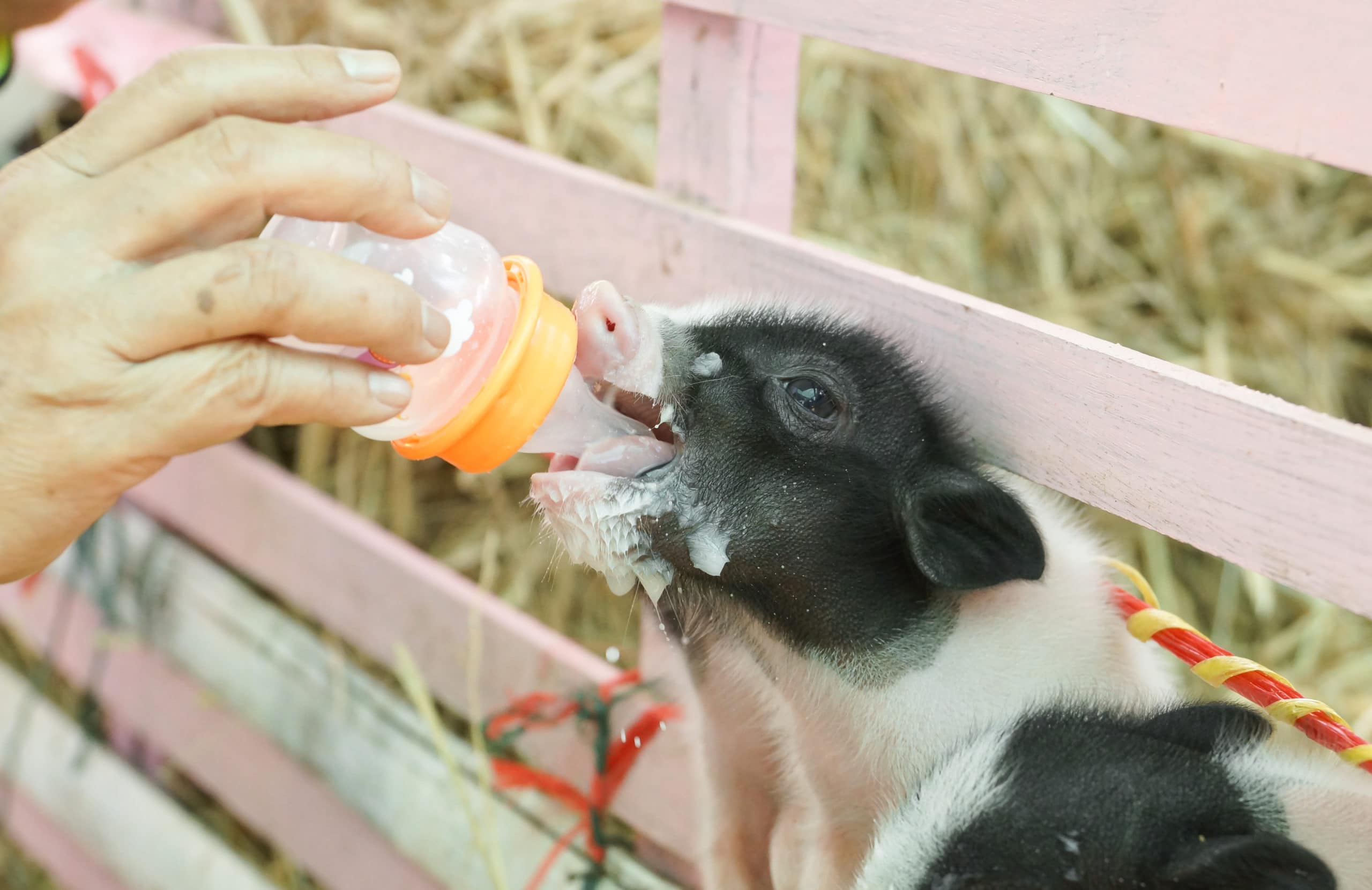
Your mini pig needs a diverse diet of high-quality pig pellets, veggies, and fruits. Different food formulas are made for different stages of your pig’s life, including starter pellets, young and growing feeds, adult pellets, and senior pig food. Newborns are generally bottle-fed. Always consult with your vet about what pellet formula to feed your mini pig.
In addition to commercial pig chow, feed your mini pig a variety of fruits and veggies. These can include celery, peppers, cucumbers, carrots, pumpkins, sweet potatoes, pears, grapes, apples, and leafy greens.
Always ensure your mini pig has access to clean, fresh water.
How Do I Take Care of My Mini Pig?
Mini pigs are highly intelligent animals and need plenty of socialization and affection. Plan to spend at least a couple of hours every day interacting with your pig.
Since it’s a curious creature, your mini pig will try and get into everything. Pig-proof your home with baby gates and child-proof locks. When your pig is out and about, keep a close eye so they don’t eat toxic items, hurt themselves on a sharp corner of the furniture, or get too rough with small children. Keep them in a safe, secure pen when you’re not watching them.
Routine care is essential: mini pigs need regular hoof and tusk trimming, vaccinations, deworming, and dental checkups to stay healthy. Early socialization and handling can make vet visits easier down the line.
How Do I Know If My Mini Pig Is Sick?

Like any animal, mini pigs are still susceptible to diseases and injuries. Some common signs of a sick pig include inappetence, lethargy, lameness, fever, difficulty defecating or urinating behavioral changes, and skin changes, such as lesions or sores.
If you notice any of these signs, take your mini pig to the vet right away.

Related reads:
Conclusion
Mini pigs can be wonderful, affectionate companions, but they come with long-term commitments, space and cooling needs, specialized care (hooves, tusks, skin), and significant costs. Misleading “teacup” marketing often causes unrealistic expectations, a true miniature pig is rare, and most grow much larger as they mature.
Here are the care guides for a few more interesting pets!
- How to Take Care of a Toad (Care Sheet & Guide)
- How to Take Care of a Pet Rat (Care Sheet & Guide)
- How to Take Care of a Pet Snake (Care Sheet & Guide)
Featured Image Credit: Alexas_Fotos, Pixabay