






Click to Skip Ahead
Rabbits are generally considered one of the cutest animals, and their twitching noses are one of their most adorable features. But have you ever wondered if there’s more to that wiggling bunny nose than making humans weak in the knees? Besides their incredible hearing, rabbits have an enhanced sense of smell and unusual nasal movements. Keep reading to learn four possible reasons that rabbits’ noses twitch and wiggle, plus what it means if this behavior stops completely.

The 4 Reasons Why Rabbits’ Noses Twitch & Wiggle
1. To Improve Their Sense of Smell
One of the most common reasons rabbits’ noses twitch and wiggle is to help them smell better. Rabbits rely on their sense of smell to give them information about the world around them, helping them find food and detect the presence of predators. Wiggling their noses allows more air into the rabbit’s nasal pathways and increases the movement of air over the olfactory receptors, enhancing scent detection.

2. Stress
If a rabbit’s nose twitches and wiggles rapidly, it could be due to stress, or alertness to potential danger, as their breathing and heart rate often increase in these situations. The rabbit is trying to inhale as much air as possible to determine if there is a good reason to be afraid. You might notice this happening if someone unfamiliar interacts with your bunny or a loud noise startles them. You might see other signs that your rabbit is stressed, such as body tension, flat ears, or hiding.
3. Curiosity
Another reason a rabbit’s nose may twitch or wiggle rapidly is that they’re curious about something. More air means more scent molecules and therefore potential knowledge to be gained. Pet bunnies are relatively safe, but the extra information that nose twitching provides could be lifesaving for wild rabbits.
Look for other body language clues to determine which situation you’re dealing with. A curious rabbit will otherwise appear relaxed, with a normal ear position. They won’t be tense or crouched down but sitting or lying casually.

4. Communication and Emotional Expression
A rabbit’s nose doesn’t just help them smell; it also reflects how they’re feeling. The rate of twitching often changes with their emotional state. A fast, fluttery twitch can indicate excitement, curiosity, or mild stress, while slow, gentle movements suggest calmness and comfort. Because rabbits use subtle body language to communicate, observing the speed and rhythm of nose twitching can give valuable insight into their mood. Paying attention to these cues helps you better understand what your rabbit is experiencing and how to respond appropriately.
What If a Rabbit’s Nose Isn’t Twitching at All?
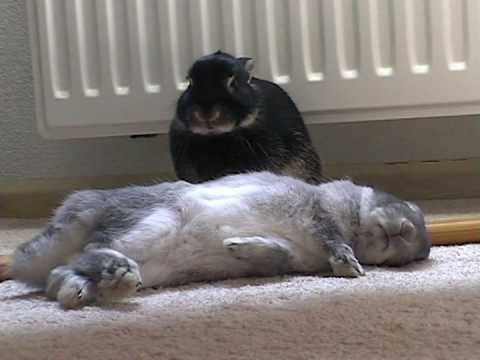
If a rabbit’s nose isn’t twitching fast or slow—it’s typically that they are asleep. This does not mean that the rabbit never twitches their nose while they are sleeping, however, when a rabbit is relaxed and does not feel the need to gather clues and information from the environment, their nose twitching might stop.
Additional Information
Remember that you know your bunny better and if you have noticed a change in their behavior that you consider might be a reason for concern it is best to have them checked by your veterinarian. Changes in their respiratory rate, as well as sneezing, nasal discharge, a reduced appetite, and even a lack of or reduced grooming, are all signs of medical problems.
Conclusion
Wild rabbits don’t have any humans to impress, so it makes sense that there’s a practical purpose for their noses to twitch and wiggle. Nose twitching is mostly used to increase the rate of airflow and therefore the amount of scent information the rabbit receives from their environment. It also plays a role in communication and reflects a rabbit’s alertness and emotional state. Likewise, the lack of nose twitching might be an indication that your bunny is asleep. Being always aware of your bunny’s habits and other elements of body language offers important clues to how your bunny feels. If you notice something of concern, please take your rabbit to the vet for a checkup.
- See also: Do Rabbits Have a Good Sense of Smell?
Featured Image Credit: wernerdetjen, Pixabay