







Click to Skip Ahead
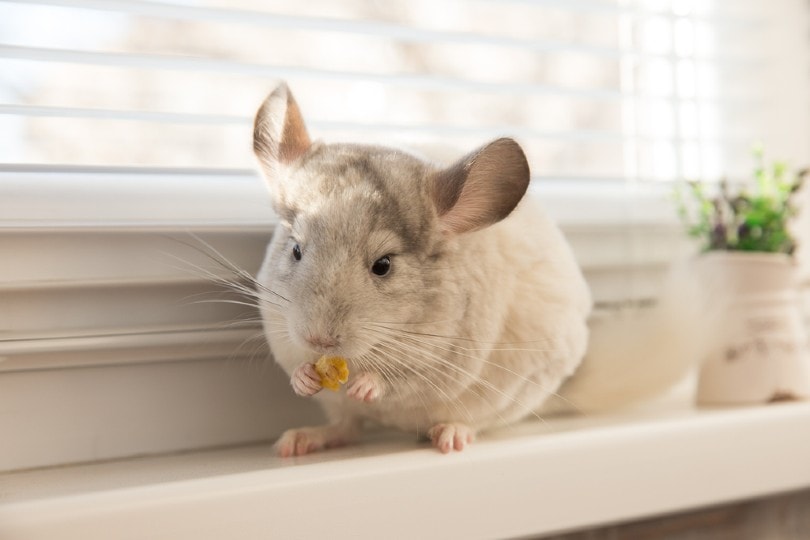
Chinchillas are herbivores, which means they eat plants. In the wild, they mostly eat grasses, shrubs, leaves, and bark found in the mountainous regions to which they are native. However, they may occasionally consume insects or animal matter opportunistically.1 They won’t go hunting for insects, but if they see one, they might eat it. They eat all sorts of different plants in their native areas, including shrubs, grasses, flowers, and roots. They are also known for eating bark, which is high in fiber. For this reason, they also need a high amount of fiber as pets. In both the wild and captivity, chinchillas thrive on a high-fiber, low-fat diet. For pets, the cornerstone is quality hay, supported by species-specific pellets and the occasional herb or dried treat.
As you might imagine, a chinchilla’s diet varies a bit when they are domesticated. They don’t have control over their own diet and must rely completely on their owners for sustenance.
Their natural intake is high in fiber and low in fat, protein, and sugar, which keeps their teeth worn down and their gut functioning smoothly. In the wild, they eat mostly grasses, so hay is a suitable alternative when they are domesticated. They will also eat grasses, leaves, and twigs, but these are harder to provide safely in captivity. Most grasses in suburban areas have been treated with dangerous chemicals that will hurt chinchillas. Therefore, only hay and grasses specifically grown for chinchillas or other small pet animals should be used.
Chinchillas that are pets should also be fed appropriate pellets, as these provide added nutrients and vitamins that they may not get from the hay. They can be given dried fruits, root vegetables, and assorted herbs, but these should only be provided as treats, as they can cause the chinchilla to become overweight.

What Fruits and Vegetables Can Chinchillas Eat?
Chinchillas have very sensitive digestive systems, and only a small number of vegetables and fruits are suitable as occasional treats. The primary component (80–90%) of a chinchilla’s diet should be hay, available ad libitum (at all times).
- Alfalfa
- Celery
- Potato
- Carrot
- Kale
- Sweet potato
- Squash
Fruits that are high in sugar should only be fed occasionally, including apples and most berries. These are simply too calorie dense without offering increased nutrition. Therefore, they may cause nutritional deficiencies if chinchillas are fed too many of these fruits. They can also cause obesity due to the high amount of sugar.

Where Can You Purchase Chinchilla Food?
You can purchase suitable hay from nearly any pet store. If the store carries other small pet supplies, they will likely have some sort of appropriate hay. These stores will often have pellets too. However, this is a bit rarer than hay. You may have to order the pellets online, as not all stores carry them.
Veggies and fruits can be purchased from the store. Human-grade fruits and veggies are perfectly fine. Many people use scraps from their own supply of vegetables and fruits, since chinchillas often eat very little. They aren’t going to eat a whole pack of celery.
Can Chinchillas Eat Rabbit Food? Or Other Rodent Food?
Chinchillas aren’t kept as pets as often as other rodents, such as mice and rabbits. For this reason, it may be tempting to buy food designed for these other animals, as it is often easier to find.
Chinchillas can eat some foods designed for these other rodents. For instance, hay is usually pretty universal. You don’t have to purchase species-specific hays. Hay is sometimes advertised as being for specific species, even though it’s the same.
However, you must feed chinchilla-specific pellets. They need specific vitamins and minerals, which these pellets provide. Pellets designed for other species may contain too much of some nutrients and too little of others. A balanced, species-appropriate formula is essential.
Do Chinchillas Eat Other Animals?
Technically, chinchillas are classified as herbivores, though they may opportunistically eat insects or bird eggs. However, animal-derived protein does not have a significant role in their diet. They will not purposefully hunt animals and are not adapted for digesting animal proteins or fats.
What Is a Chinchilla’s Favorite Food?
A chinchilla’s favorite food is going to vary from individual to individual. While these animals all have the same general diet, they do have their own preferences. It is important to point out that their favorite foods typically aren’t things that they can have very often. Chinchillas tend to like fatty or high-carb foods.
From a survival perspective, this makes sense. You want to eat the most calorie-rich items, as these will keep you alive for longer than low-calorie items. However, a diet that only consists of high-calorie items is bound to lead to obesity. Furthermore, many of these high-calorie items are not nutrient dense, so they can lead to nutrient deficiencies if that is all your chinchilla is eating.
You’ll have to figure out your chinchilla’s favorite food based on experimentation. Simply try a few different treats, and see what they prefer. Of course, you shouldn’t just give them their favorite food all the time, but you can use it as an occasional treat.
How Often Do Wild Chinchillas Eat?
Chinchillas in the wild usually eat twice a day—in the morning and in the evening. Like rabbits, they usually come out during low-light times. This is when they can see enough to carefully find appropriate foods, but it isn’t so visible that they may be taken off by a bird or similar predator.
However, unlike many other rodents, they may consume food throughout the day. They eat somewhat slowly, so they may not be able to consume all their necessary food during this time.
Pet chinchillas can be offered a similar amount of food. They should be offered food twice a day, but hay should generally be provided all the time. They typically won’t overeat hay, and it provides them with an opportunity to wear down their teeth.
Can Chinchillas Eat Cheerios?
Yes and no. While plain Cheerios (non-flavored or sweetened), are not toxic, they should only be fed as a very occasional treat and in small quantities. Eating too much can cause problems to your pet.
Many chinchillas do like Cheerios, so they could make good treats for bonding with your pet or training. They are also inexpensive. Of course, be sure to get plain Cheerios only, as flavored varieties contain added sugar that can disrupt their diet.

What Foods Are Bad for Chinchillas?
There is a long list of food that chinchillas can’t eat. As you might imagine, you shouldn’t give your chinchilla anything that doesn’t fall into the fruit or vegetable category. Dairy, meats, and similar foods should be avoided. These aren’t a part of their natural diet, and they do not have the enzymes to break them down properly. This can upset their stomach and cause health problems.
There are also types of fruits and vegetables that they cannot eat.
- Asparagus
- Avocado
- Peas
- Cabbage
- Corn
- Lettuce
- Broccoli
- Spinach
- Rhubarb (and leaves)
You should also avoid high-fat nuts and seeds, including sunflower seeds and peanuts. While these animals may eat low numbers of seeds in the wild, these are typically not fatty like sunflower seeds. Very sugary fruits should be avoided as well, such as strawberries and bananas. Look for low-calorie, high-nutrient foods.
Pay special attention to the calcium-phosphorus ratio. An imbalance can lead to metabolic issues, so stick with a small, approved list of treats and consult a vet for anything uncertain.

- You may also want to read: Can Chinchillas Eat Hamster Food? What You Need to Know!
Final Thoughts
In the wild, chinchillas mostly eat grasses and other vegetation. They are similar to rabbits in this manner. They may occasionally eat an insect, but this is usually an opportunistic eating pattern. If a bug happens to be in front of them, they will eat it. However, they won’t go out and search for them.
For a pet chinchilla, the easiest way to mirror this diet is by providing them with plenty of hay. The hay also wears their teeth down, which is important for their overall health. They can also be given a few safe veggies and fruits for extra nutrition. Always provide species-specific pellets, as these are fortified with valuable nutrients.
Related read:
Featured Image Credit: Lyona, Shutterstock