







Click to Skip Ahead
Raisins are tasty and relatively healthy snacks for us humans, and we know our pet rats enjoy sweet fruits in their diet in moderation. As pet owners, we understand that animals can’t always enjoy the foods we do, for a variety of reasons. But can our pet rats eat raisins? The answer is unfortunately quite complex, as there is a lack of evidence-based research to confirm or deny the fact. That is why we would recommend avoiding feeding raisins to rats until more scientific information becomes available.
Besides the potential risk of toxicity that has been described in dogs and cats, raisins have a very thick, gooey texture, and it may be difficult for your rat to chew, presenting a choking hazard.
Another thing to keep in mind is that raisins are pretty high in sugar, and you don’t want your rat consuming heavy amounts of sugar, even if it’s natural. They have sensitive stomachs, and an overload of sweetness isn’t good for their health. Before offering raisins to your rat, it’s best to consult with an exotic veterinarian.

What Does a Rat’s Diet Consist Of?
It’s no secret that in the wild, rats will eat just about anything they come across. They have shorter lifespans in the wild for this reason. They tend to eat very unhealthily as they rummage through human garbage and eat as much as they can. They’ll also unknowingly eat poisons set out by humans simply because they taste good.
Pet rats generally live longer thanks to their human companions who keep their best interests at heart. Most rat owners do their research and understand what kind of diet to feed their rats to ensure their overall health and well-being. What does that diet look like?
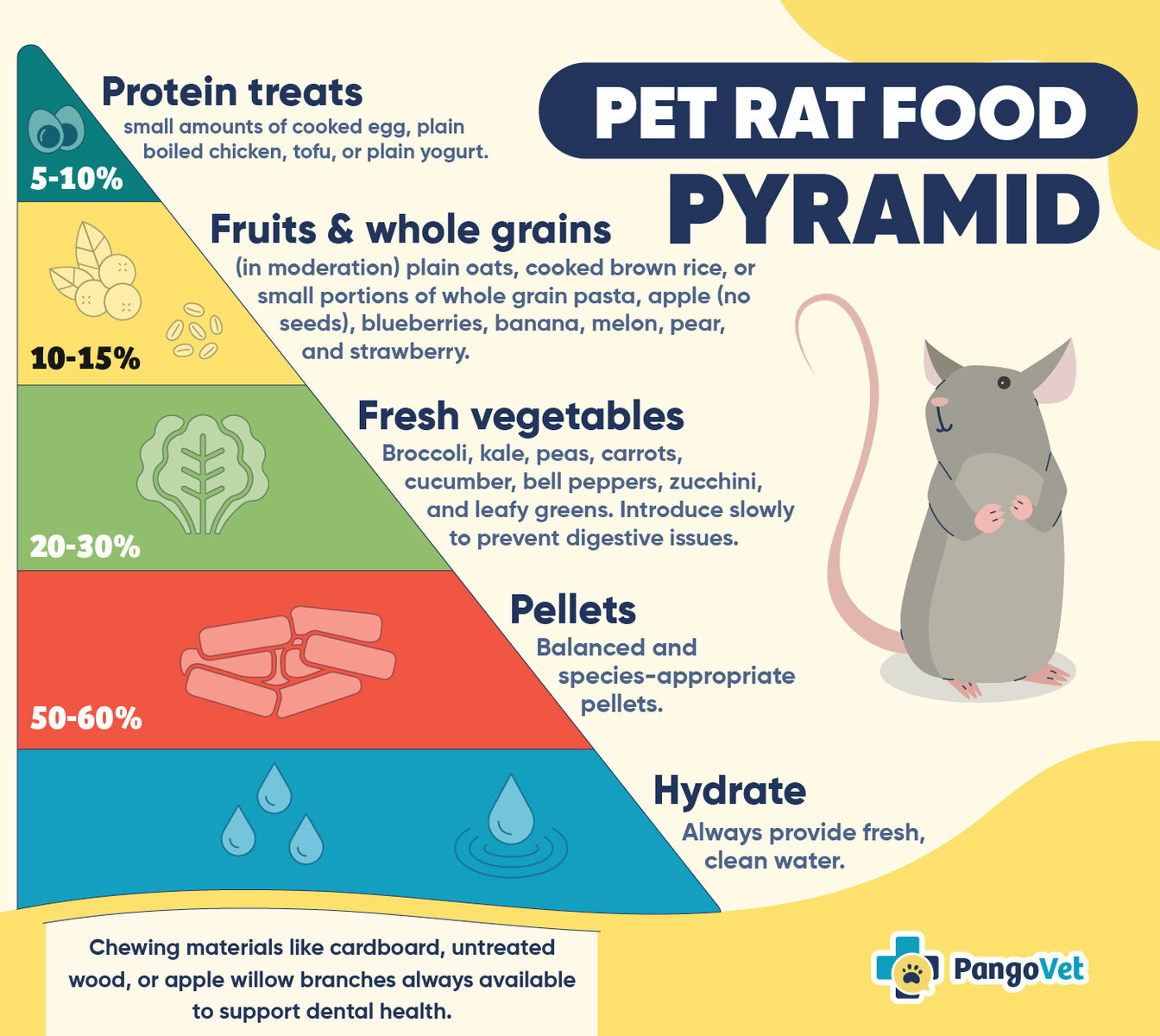
Rats need 50% to 60% of their diet to consist of a high-quality pellet mix formulated for rats. Another 20% to 30% of their diet should be fresh vegetables, while fruits and whole grains shouldn’t be more than 10-15%. Rats are omnivores, so they can be given occasional treats such as meat, certain nuts, and seeds. These foods should be fed sparingly due to being high in calories and fat.
As there is only very little research into offering raisins to rats for their antioxidative properties, especially if done regularly or long-term, we recommend speaking to your vet first.
What Fresh Fruits Are Safe to Feed Rats?
Knowing that raisins are best avoided, you may be wondering what other fruits you can incorporate into your rat’s diet. Remember, only 10% to 15% of your rat’s diet should be fruits, while vegetables make up around 20-30%, so fruits won’t make up a large portion of their diet. Fruits do need to be offered very moderately due to high water and sugar content. We’ve compiled a list of safe fruits below, to be given in strict moderation and according to veterinary advice:
- Banana
- Blackberries
- Blackcurrant
- Blueberries
- Cantaloupe
- Cherries
- Coconut
- Cranberries
- Dates
- Dragon Fruit
- Fresh Figs
- Grapes
- Kiwi
- Mulberry
- Nectarines (without the pit)
- Olives
- Papaya
- Passion fruit
- Peaches (without the pit and seeds)
- Pears (without the pit and seeds)
- Pineapple
- Plums (without the pit)
- Pomegranate
- Raspberries
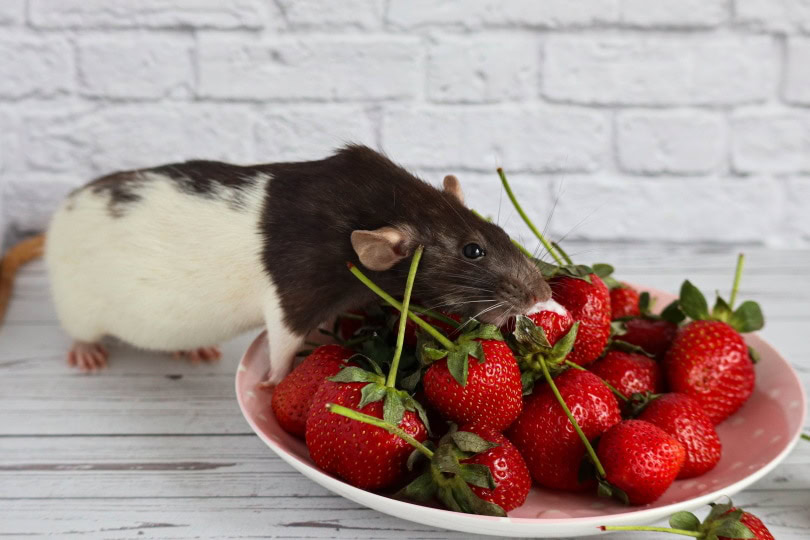
- Strawberries
- Watermelon
What Fresh Vegetables Are Safe to Feed Rats?
Now that you’re familiar with some of the fresh fruit options to occasionally implement into your rat’s diet, here is a list of fresh vegetables that can be included in moderation and according to veterinary advice:
- Asparagus
- Bell peppers
- Bok choy
- Broccoli
- Carrots
- Cucumber
- Okra
- Peas
- Pumpkin
- Romaine lettuce
- Zucchini
What Foods Should I Not Feed My Rat?
It’s important to know what kind of foods you need to avoid when feeding your pet rat. We’ve put together a list of foods that are either best avoided entirely or should be fed very sparingly.
- Artichoke (avoid)
- Alfalfa (avoid)
- Beans (raw beans will deplete vitamin A and interfere with digestive enzymes in rats)
- Beets (high in oxalic acid, can cause kidney stones, calcium deficiency, and other health issues)
- Bread (feed sparingly and in small amounts)
- Brussels sprouts (avoid, causes vitamin B1 deficiency in rats)
- Caffeine (avoid)
- Candy (avoid, high in sugar)
- Chocolate (avoid, contains high sugar and caffeine)
- Red cabbage (avoid, causes vitamin B1 deficiency in rats)
- Iceberg lettuce (high in water content, no nutritional value)
- Leeks (avoid, choking hazard that can cause upset stomach)
- Onions (avoid, can cause anemia and upset stomach)
- Peanuts (avoid, very high fat content, and may be contaminated with mold)
- Spinach (feed sparingly, if at all, high in oxalic acid, can cause kidney stones, calcium deficiency, and other health issues)
- Rhubarb (high in oxalic acid, can cause kidney stones, calcium deficiency, and other health issues)
- Swiss chard (high in oxalic acid, can cause kidney stones, calcium deficiency, and other health issues)
Conclusion
Rats should ideally stay away from raisins until more evidence-based research becomes available. Pet rats rely on their owners to ensure they are fed a high-quality, nutrient-dense diet for the sake of their health. They may have shorter lifespans than your average pet, but you can help them reach their maximum life expectancy by knowing what diet is best for them.
Related reads: