







Click to Skip Ahead
Chinchillas are sociable animals. In the wild, they live in herds of a hundred or more. When kept as pets, they do require socialization. This doesn’t necessarily mean that you must have two or more chinchillas, but you should be prepared to invest a lot of time in playing with and keeping your chinchilla company if they are to be kept alone.
Chinchillas need a dry indoor cage in a cool area of the house, as they are susceptible to heatstroke. They need to have a soft substrate to prevent injury to their feet, and they benefit from having branches and multiple layers in a home. These layers mimic the ledges, rocks, and trees that the chinchilla would climb in the wild.
Because they live in large colonies, chinchillas can become stressed and depressed if kept alone as a pet. Once this happens, they become more susceptible to illness and disease. There are two basic ways to prevent loneliness: keep two or more together or be prepared to spend a lot of time socializing and playing with a single chinchilla.


Introducing New Chinchillas
Although they are sociable animals, chinchillas can be aggressive towards one another. Females can be aggressive towards one another and even towards males during the mating season. If they get into a fight, they may seriously injure each other or worse. Never keep young chins (under 9 months) of the opposite sex together because they will breed, and it can lead to serious birthing problems.
When introducing two chinchillas, keep them in separate cages, far enough apart that they cannot get to one another through the bars. Initially, they may react negatively when they see and smell the other. A female might attempt to urinate at the male through the bars, but after a few days, they may calm down in one another’s company.
When the two chins have calmed down to a point of curiosity and complete lack of aggressive or fearful body language, find some suitable, neutral ground. You can place the cages closer to each other, or even swap the cages, so they get used to each other’s scent. After this step has been successful for a few attempts, proceed with more direct introductions. Avoid using a cage for this meeting, because the chins might feel stuck and threatened. Ensure the area is secure and provide a toy or sand bath for the chins. Place them together and carefully watch them. They may come together, and they may run around after one another, but if there is any biting or if blood is drawn, separate them and put them back in their own cages, leaving them a reasonable distance from one another.
Eventually, your chinchillas may be comfortable in one another’s company, and you can attempt to transfer them to a cage. Ideally, this should be a new cage so there will be no territorial problems. This isn’t always practical, and if you are introducing two chins of opposite gender, give them the male cage. It is the female that tends to be territorial and more aggressive. If they show any signs of aggression, reconsider the previous steps. However, be mindful that some chinchillas may need to be kept separate in order to prevent fighting, regardless of the slow introduction process.
If they are getting along well, place both chins in a new or thoroughly cleaned cage at the same time. Observe their body language carefully in order to prevent any fights. Watch for persistent chasing, prolonged teeth chattering, and fearful or aggressive body language. This is the time to separate them and reconsider if they should be kept separate, rather than trying again and risking a proper fight and injuries.
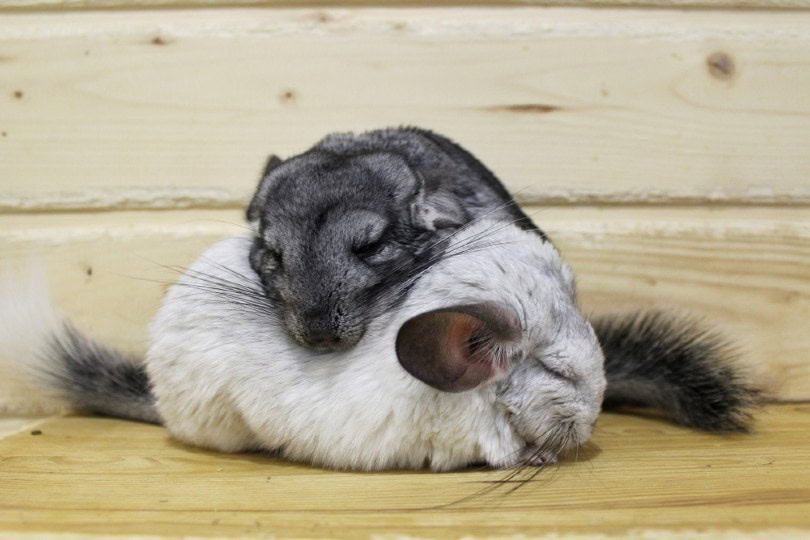
Once the two are living together, you should still monitor their progress for signs of aggression, but if you see them cuddling up to sleep, this is a clear sign of acceptance on both their parts.
Can Chinchillas Be Happy Alone?
They are a sociable animal, but this doesn’t necessarily mean that your chinchilla needs another chinchilla friend. As long as you can dedicate the time and energy to regularly socialize and handle your pet, you can provide the company your chin needs.
Keeping a Single Chinchilla
Be prepared to spend time with yours every day. Provide a minimum of 30 minutes to an hour of playtime. If possible, have playtime outside the cage. Make sure the area is chinchilla-proof, provide some places to hide, and offer some form of entertainment such as safe chews and tunnels.

Do Chinchillas Like to Be Held?
These playful little creatures tend to tolerate handling very well. If possible, start holding your chinchilla when they are very young and continue to handle them every day. It shouldn’t take long to get used to the process, and it will make your chin’s life and your life easier.
- An older chinchilla that has never been socialized might prove more of a challenge.
- Start by spending time near the cage and talking to your chin. They will get used to the sight and the sound of you, so they should be less stressed out when you do attempt to handle them.
- Once they are comfortable in your presence, try putting your hand in the cage, flat and with your palm up.
- Do this for a couple of minutes and, hopefully, the chin will want to investigate after a few days of repeating the process.
- Eventually, and gradually, you should be able to convince even a mature chinchilla that has never been held before, to get on your hand.
Chinchillas do not enjoy cuddles and being stroked in the same way that cats and dogs do, but they are still fun and cute pets to keep.
Do Chinchillas Bite?
Although typically a friendly animal, chinchillas can become scared. If you startle, surprise, or accidentally hurt a chinchilla, they may be prone to bite your finger. They do have long and sharp teeth, so even an accidental bite can hurt, and it may draw blood.
Can You Keep Chinchillas With Other Animals?
You should not keep chinchillas in a cage with other animals, not even other rodents. Your chin should not need to get accustomed to having a cat or dog hovering around the cage, and you should ensure that all other animals are kept out of the way when you do let your chin out. Chinchillas are prey animals, and they can become frightened when presented with a larger and potentially more dangerous animal.
Do Chinchillas Need a Friend?
Chinchillas are sociable animals. If you want a happy and healthy pet chin, then you will need to meet their social requirements one way or the other. This means getting a second chinchilla or being prepared to offer 30 to 60 minutes a day of handling and playing with yours.
The good news is that chinchillas are playful, fun, and cute animals. They might not cuddle, but they will enjoy your company once you have bonded and keep you entertained. While the introduction process can take a few weeks, this helps prevent any aggression, which is more likely to occur between two females or by a female towards a new male, and keeps you and your pet safe and happy.
See also:
- How Cold Can Chinchillas Tolerate? Vet-Reviewed Ideal Temperature Guidelines
- Are Chinchillas Endangered?
Featured Image Credit: tahanadakila, Pixabay