







Click to Skip Ahead
If cutting a dog’s nails is a daunting task that can turn off many pet owners, imagine trimming the nails of a creature as tiny as the hedgehog! However, it is possible, and above all sometimes necessary, to do so. All you need is the right tools, the right method, patience, and a little practice. We are going to walk you through this process step by step so that you can learn to cut your hedgehog’s nails with more confidence.
But before reading any further: Do not hesitate to ask your veterinarian for advice. If, even after reading our article, you don’t feel confident enough to trim your little hedgehog’s nails on your own, your best bet is to ask a professional for some help.

Why Do You Need to Trim Your Hedgehog’s Nails?
The hedgehog is a small insectivorous mammal that is easily recognized by its spines, which are actually hollow hairs made of keratin. In the wild, they feed mainly on small invertebrates and amphibians such as snails, frogs, and insects. They supplement their diet with berries, bird eggs, roots, mushrooms, and other plants. Thanks to digging, their constantly growing nails wear out naturally.
However, in captivity, if they do not have the opportunity to wear down their nails, this makes them more vulnerable to injury and ingrown toenails. Toenails that are too long can also interfere with their gait and prevent them from gripping live prey, such as hopping crickets.

How Often Should You Trim Your Pet’s Nails?
The hedgehog’s nails grow fairly quickly: expect to have to trim them every two or six weeks or so.
How to Handle Your Hedgehog Correctly
Before you learn how to trim your little hedgie’s nails, you need to know how to handle them properly.
- Gently slide your open hands under the belly of your little companion. This way you will avoid getting pricked. Keep your hands relaxed. When it is well installed and stable, you can lift them quietly. You can also use their blanket to take them out of his cage, as it is good protection against their small spines. But beware: a hedgehog can be very fast!
- Don’t tuck your fingers under the belly, so they won’t get trapped by their prickly armor if they suddenly curl up. Instead, keep your hands open, palms facing the belly of the hedgehog.
- Eliminate any risk of fall. During your first manipulations, place yourself on a bed or near the floor. So, if you are surprised by your pet’s quick reaction, they won’t risk falling from a height and injuring themself.
- Be aware that the hedgehog has poor eyesight and only perceives the world in two dimensions, that is to say, without perspective. If you place them on a high piece of furniture, they can throw themselves down without realizing they were so high because the floor may appear to be on the same level.
- If they curl up into a ball, don’t try to stretch them: you will do more harm than good. Instead, use gentle circular motions on their back to relax their muscles; that will make them want to stick their head out.
- Do not pet your hedgie when they are in their cage because they will most likely feel threatened by a hand that comes from above. Take them out so they can see you better.
- Give them enough time to wake up and speak quietly to them so that they get used to the tone of your voice.
- Stay calm. If you are a little nervous during the first manipulations, try to calm down because the animals can perceive these vibrations. Also, don’t be afraid of your hedgehog’s little spines: unlike the porcupine, the hedgehog’s quills do not detach from their skin.
- Find the technique that works best for you and stick with it. In any case, be patient and repeat the previous steps every day so that your hedgehog gets used to you.
Side note: Even if your hedgehog’s spines hurt your hands a bit, resist the urge to grab your animal with gloves. This will only scare your pet and prevent him from getting used to your scent.
The 5 Steps to Trim Your Hedgehog Nails
1. Gather the Right Tools
All you need is a regular nail clipper, a blanket, and some treats. You can also use a nail clipper designed for small animals, like the Kaytee Small Animal Pro-Nail Nail Clipper, which has a convenient, easy-grip handle and is perfect for your hedgehog’s delicate and tiny claws.

2. Gently Pick Up Your Hedgehog
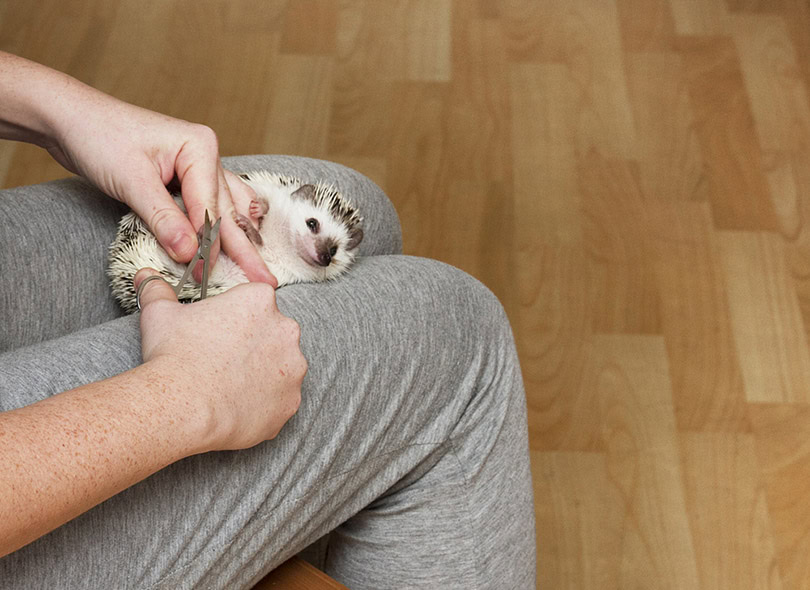
Wrap your hedgehog in a blanket to restrict their movements, especially if they like to squirm. Then, sit in a well-lit area and place your hedgehog in your lap.
3. Grab One Paw at a Time
Gently pull one of your hedgehog’s legs out of the blanket. Take the nail clipper in your dominant hand and make yourself comfortable.
4. Cut the Nails One by One
Cut off the tip of your hedgehog’s nail, but be sure not to touch the pale pink line of the nail (the quick) as it contains blood vessels and nerves. Cut only what is protruding and not too short.
5. Repeat the Process on All Nails
Repeat the previous steps until all nails are trimmed. If your hedgehog doesn’t tolerate the procedure, gets stressed too much, or tries to ball up, simply put them back in the cage. You don’t have to trim all the nails at once; you can always start over later, once your hedgehog has calmed down.
- Quick Tip: The best time for trimming is after a bath, as the nail is softer and your hedgehog calmer.
Bottom Line
If, after several unsuccessful attempts, you can’t cut your hedgie’s nails because they’re too nervous (or you are), you can try while they’re taking a little bath. However, don’t force it and for some hedgehogs who are both too nervous and whose legs are too sensitive, the only way out may be a visit to the vet.
See also:
- Why Do Dogs Get Stuck During Mating? Our Vet Explains
- Why Do Dogs Like to Be Petted? 5 Vet Reviewed Reasons
Featured Image Credit: Best dog photo, Shutterstock