






Click to Skip Ahead
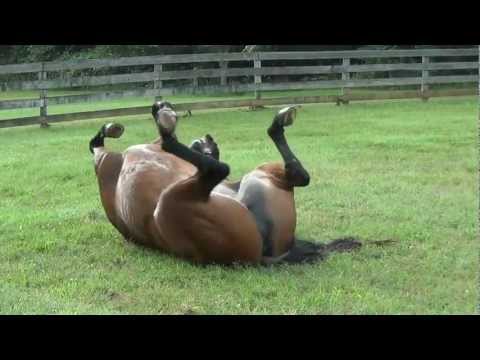
It’s a common sight, and you’ve likely seen your horse doing it and wondered what was going on. Rolling is something that horses do for a variety of different reasons. While it may seem a bit strange to us, it’s a completely natural thing for a horse to do, and it can even provide many benefits for them. However, in some cases rolling can indicate abdominal pain and colic which can be life threatening.
In the majority of cases, when interpreted according to the situation, if you see your horse rolling, there’s usually no need to stop them. Make certain that your horse has plenty of space where they can roll safely, and if it appears they have a colic, consult an equine vet immediately.

Why Do Horses Roll?
The big question is, why do horses display this behavior in the first place? In reality, there are four main reasons why your horse rolls on the ground. Here, we focus on benign causes of rolling, not on colic as a cause for rolling.
One of the major purposes of rolling is to simply provide some pleasure. Your horse enjoys rolling, and it’s not only fun for them, but it also feels good, allowing them to stretch out their muscles and maintain flexibility.
Another reason horses roll is to relieve pain or discomfort. It’s good for their spine and muscle stretching, and it can help them to feel more comfortable.
Horses also roll as an act of grooming. It helps to prevent irritation from sweat by drying it off right away in the dirt. Furthermore, the dirt acts as a protective layer against insects that want to prey on your horse’s skin.
Finally, horses will also roll for rest since it’s very relaxing and rejuvenating for them.

What About Colic?
Besides the above-mentioned non-concerning causes for rolling, colic can also lead to excessive rolling due to abdominal pain. Colic in horses is a potentially life-threatening condition that may be caused by many underlying health issues. Some of the causes for colic may include simple gastroenteritis, the presence of gastrointestinal parasites, obstruction, spasm of the gut, a more serious gastric ulcer, impaction, intestinal invagination, stomach torsion or even rupture, the presence of lipomas and tumors, and many more.
Colic needs to be addressed by a vet immediately, as it can become fatal. Some of the signs of colic, besides rolling on the ground, may include pawing at the ground, looking back at the abdomen, curling the upper lip, arching the neck, kicking at the belly with a back leg, sweating, stretching out, straining to defecate, poor appetite, reduced fecal production, and other. Speak to an equine vet if your horse is displaying any of these signs.
Signs Your Horse Is About to Roll
Now you know why your horse rolls, but how can you tell when your horse is about to? Generally speaking, they’ll offer a few signs that indicate they’re about to start rolling.
If you see your horse pacing in circles, pawing at the dirt with their hooves, and blowing into the dirt with their nose, then they may be assessing a spot for rolling. Should you see them start to bend a knee or lean to one side, they’re likely initiating the roll.
As long as your horse is in a safe area where rolling won’t hurt them, allow them to roll. However, you should be aware of these signs so that you can take action if your horse attempts to roll at an inappropriate place or time.

Benefits of Rolling for Your Horse
We’ve already mentioned the nonconcerning reasons why your horse rolls, but what benefits can these provide?
Rolling is actually an indicator of your horse’s health. A good, strong roll can indicate a healthy horse, but a weak roll can mean the opposite.
Rolling can help to stretch your horse’s spine and muscles as well as maintain flexibility in their muscles and joints. It also offers a faster way to get dry and even creates a layer of protection against insects. And finally, it’s an action that just helps your horse to feel better and can help them remain relaxed and happy.
What if Your Horse Doesn’t Roll?
All horses ought to roll. You can even tell a lot about a horse’s health by their roll. But if your horse refuses to roll, then there might be a deeper problem underlying the issue. It’s possible your horse has soreness, pain, or other problems. In such cases, it’s best to consult a veterinarian for further diagnosis.

Signs of a Healthy Roll
When your horse rolls, they should roll on both sides. Depending on your horse’s build, they might roll on one side and roll over their back to the other side and continue rolling before standing up, or they might roll on one side, stand up, and then roll the other side. Both are acceptable; it just depends on your horse’s conformation.
Healthy horses will roll vigorously. They’ll also usually go for a short run and buck a few times when they stand up.
Signs of Unhealthy Rolling
The first bad sign is that your horse doesn’t roll at all. A weak roll is also an indication of a potential problem. If your horse only rolls briefly on one side, it may mean they have a back issue that needs addressing. Weak rolls and rolling on one side are signs that you should have a vet take a look at your horse.
Rolling can also indicate colic, especially if accompanied by any of the previously mentioned signs.
Last Thoughts
You’ll want to keep an eye on your horse’s rolling behaviors. They can be a first glimpse into the health of your animal. A strong, vigorous roll can indicate a healthy and hardy horse, but a weak roll or rolling on just one side means that your horse might have an underlying problem that needs to be addressed.
Featured Image Credit: jpduretz, Pixabay